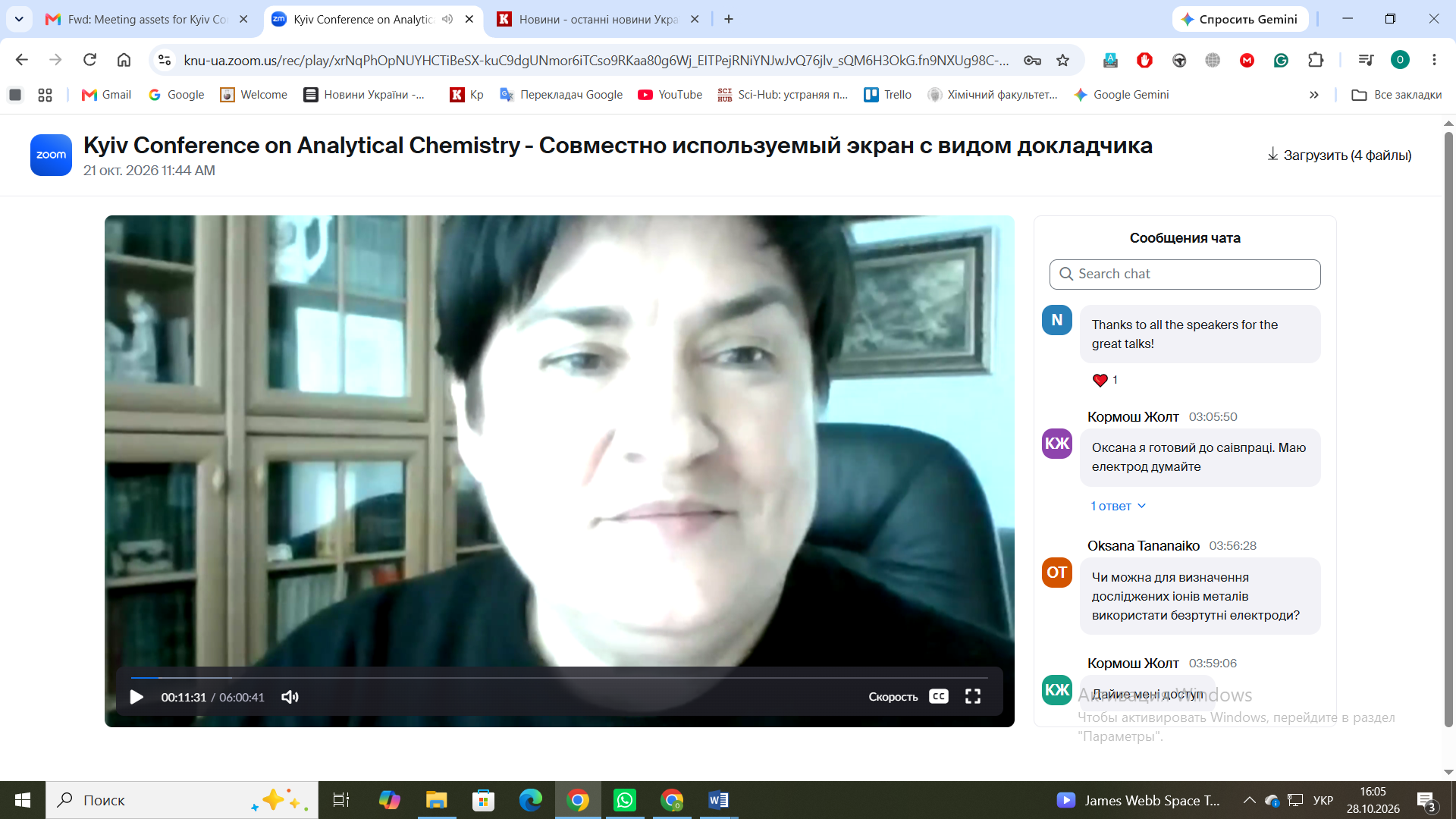
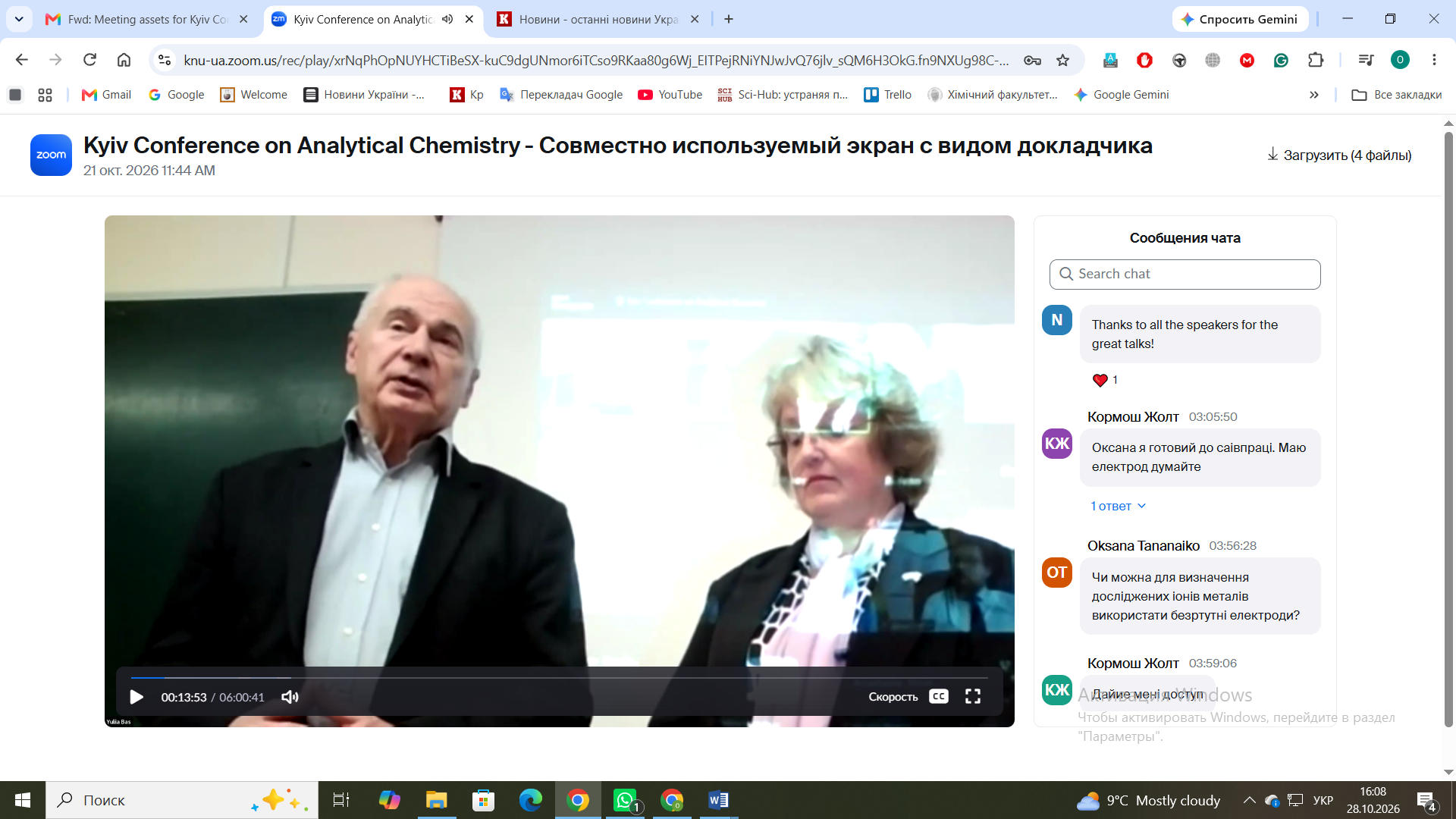
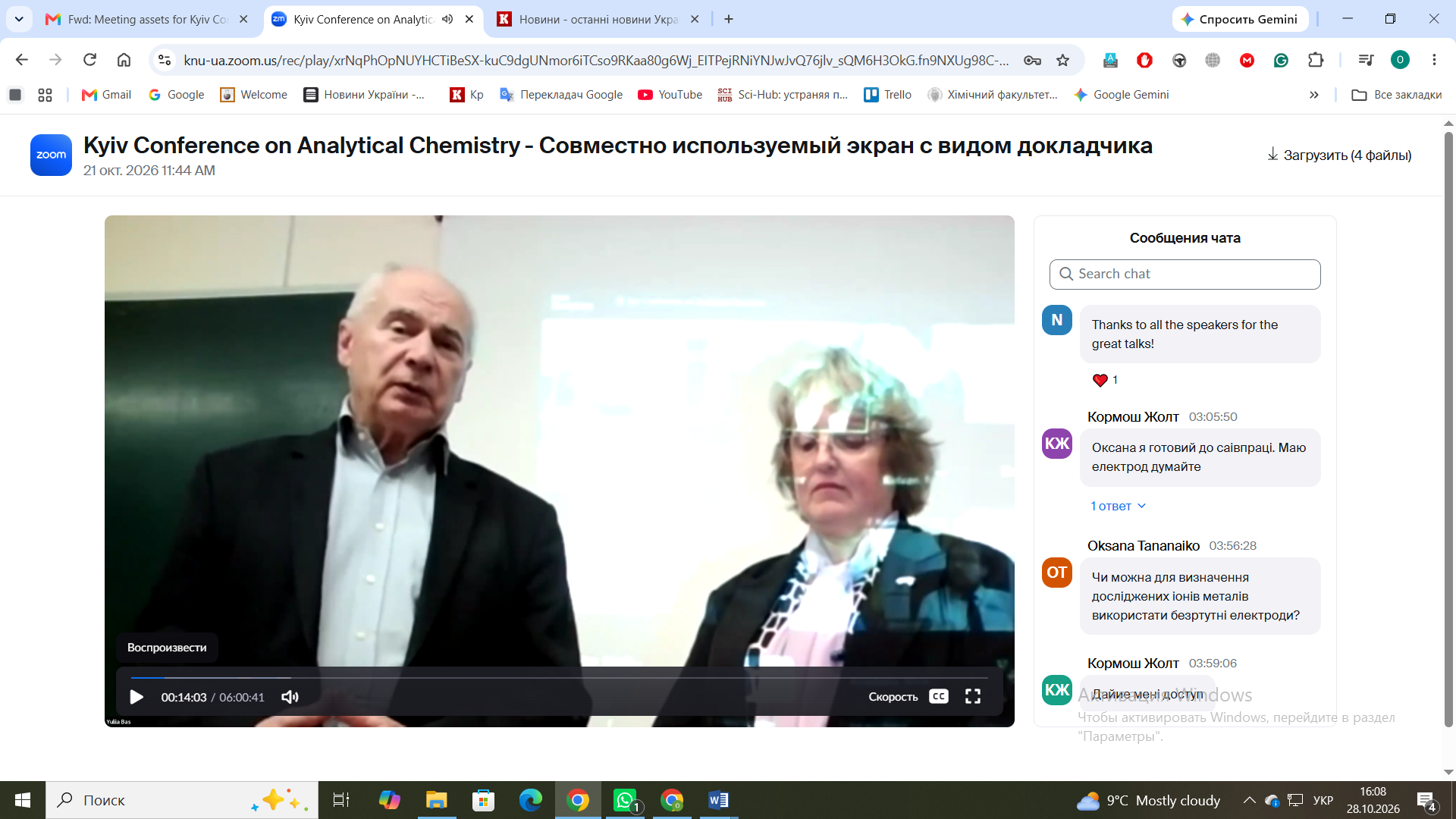
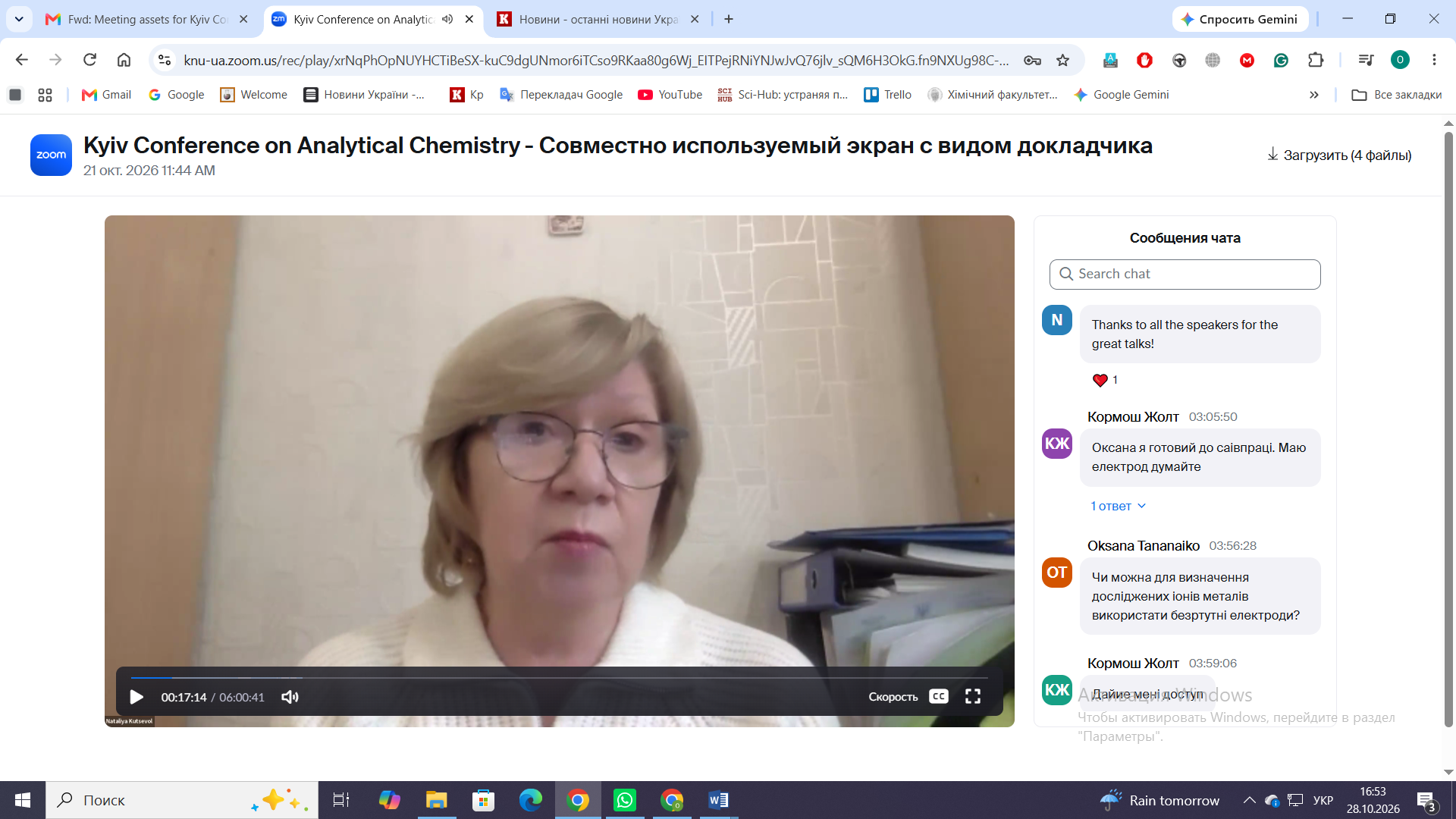
The International Kyiv Conference on Analytical Chemistry (KCAC-2026) Held on October 21–22, 2026
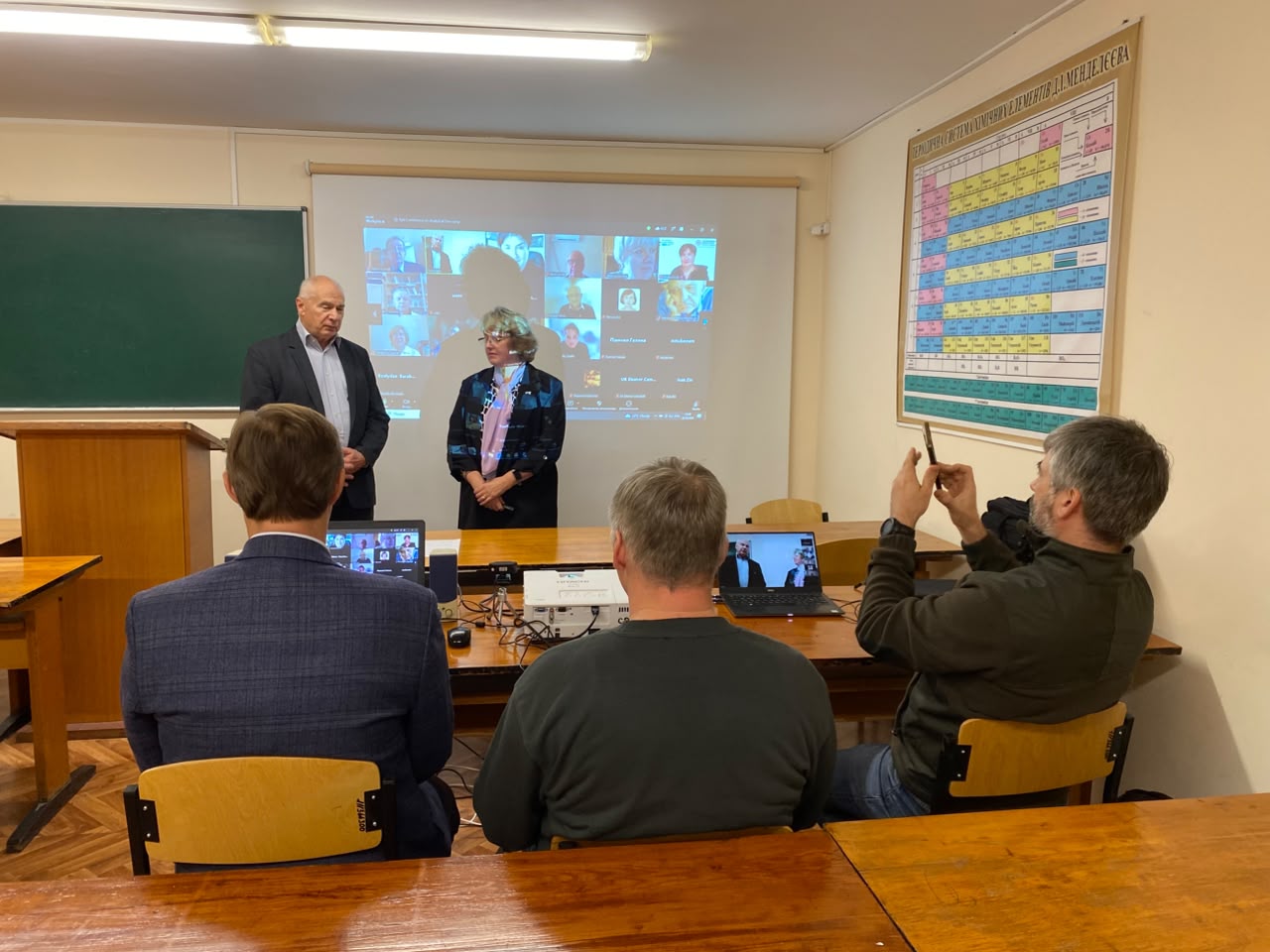
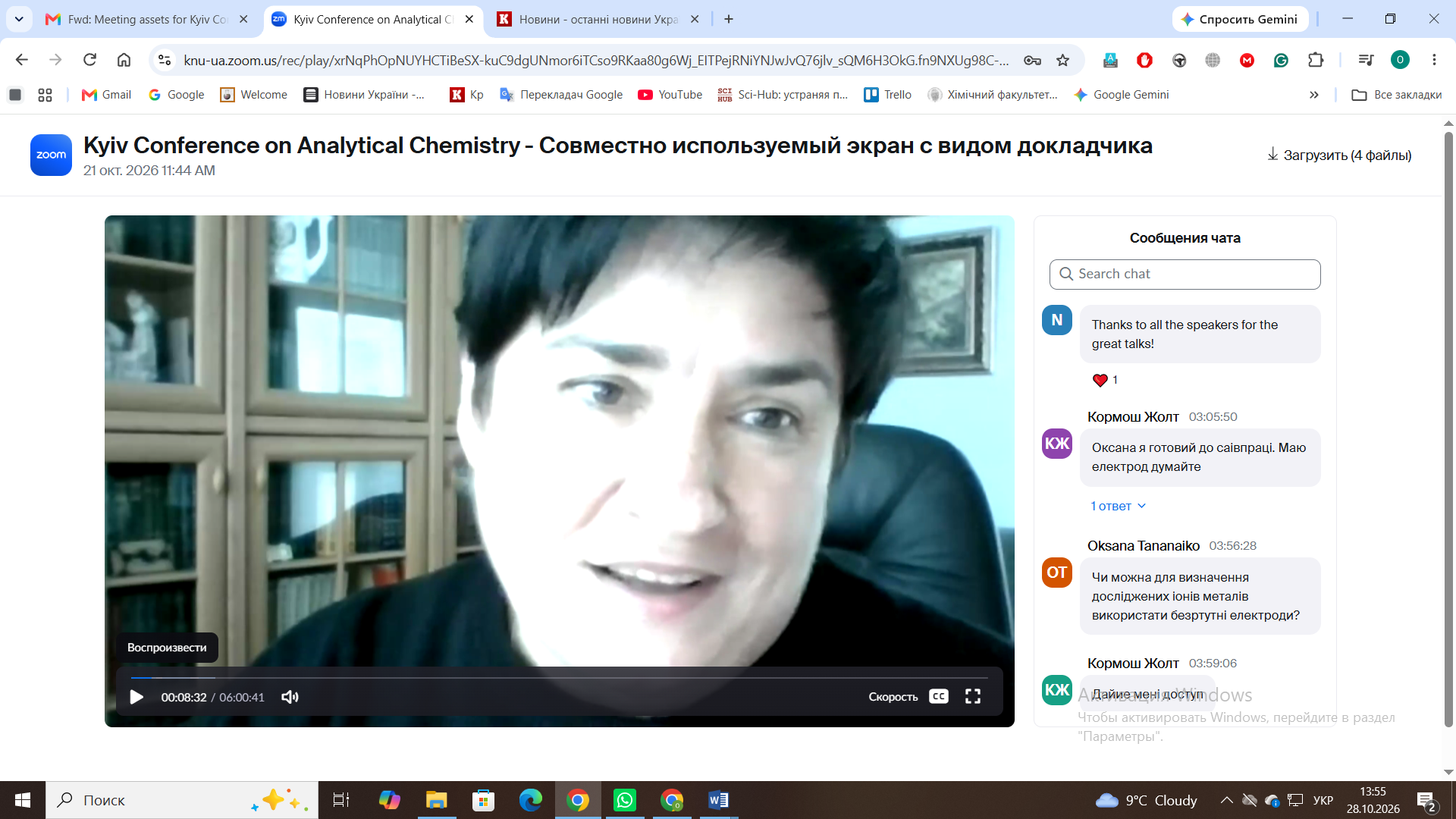
The international Kyiv Conference on Analytical Chemistry (KCAC-2026) took place on October 21–22, 2026. Since 2014, the conference has been organized by the Department of Analytical Chemistry of the Faculty of Chemistry at Taras Shevchenko National University of Kyiv. Due to the security situation, the event was held online.
This year's conference brought together more than 80 researchers from leading scientific institutions in Ukraine and European countries, providing a platform for international scientific dialogue, the exchange of experience, and the presentation of recent research findings in the field of analytical chemistry.
The conference participants included researchers from the University of Edinburgh (United Kingdom), the University of Lorraine (France), Tbilisi State University (Georgia), national universities in Kharkiv, Odesa, Lviv, Uzhhorod, and Kyiv, Lviv Polytechnic National University, the A.V. Dumansky Institute of Colloid Chemistry and Water Chemistry of the National Academy of Sciences of Ukraine, the A.V. Bogatsky Physico-Chemical Institute of the National Academy of Sciences of Ukraine, the L.I. Medved Research Center of Preventive Toxicology, Food and Chemical Safety of the Ministry of Health of Ukraine, the Ukrainian Hydrometeorological Institute of the State Emergency Service of Ukraine and the National Academy of Sciences of Ukraine, the Karpenko Physico-Mechanical Institute of the National Academy of Sciences of Ukraine, and the Donbas State Engineering Academy.
At the opening ceremony, Vice-Rector for Research, Prof. Oksana Zhylinska, highlighted the significant contribution of chemists to the development of Ukraine's scientific and industrial potential, including the research capabilities of the country's leading universities. She emphasized the important role of analytical chemistry in Ukraine's post-war reconstruction and stressed the importance of holding scientific conferences even during wartime. Such events provide opportunities for direct communication among researchers, the exchange of experience, and the generation of new ideas for further research, all of which are essential components of scientific life.
In his welcoming address, Dean of the Faculty of Chemistry, Prof. Yulian Volovenko, emphasized the important role of the conference in bringing together analytical chemists from across Ukraine and facilitating their integration into the global chemical research community. He expressed his gratitude to the Department of Analytical Chemistry for organizing the conference.
Vice-Dean of the Faculty of Chemistry, Dr. Nataliya Kutsevol, expressed her gratitude to the international participants from France and the United Kingdom for their active support of Ukraine's scientific community. In particular, she thanked the University of Edinburgh for providing research internship opportunities for master's and PhD students of the Faculty of Chemistry at its School of Chemistry, as well as for supplying the Faculty of Chemistry and the Department of Analytical Chemistry with modern scientific equipment.
The speakers extended their best wishes for a successful Kyiv Conference on Analytical Chemistry.
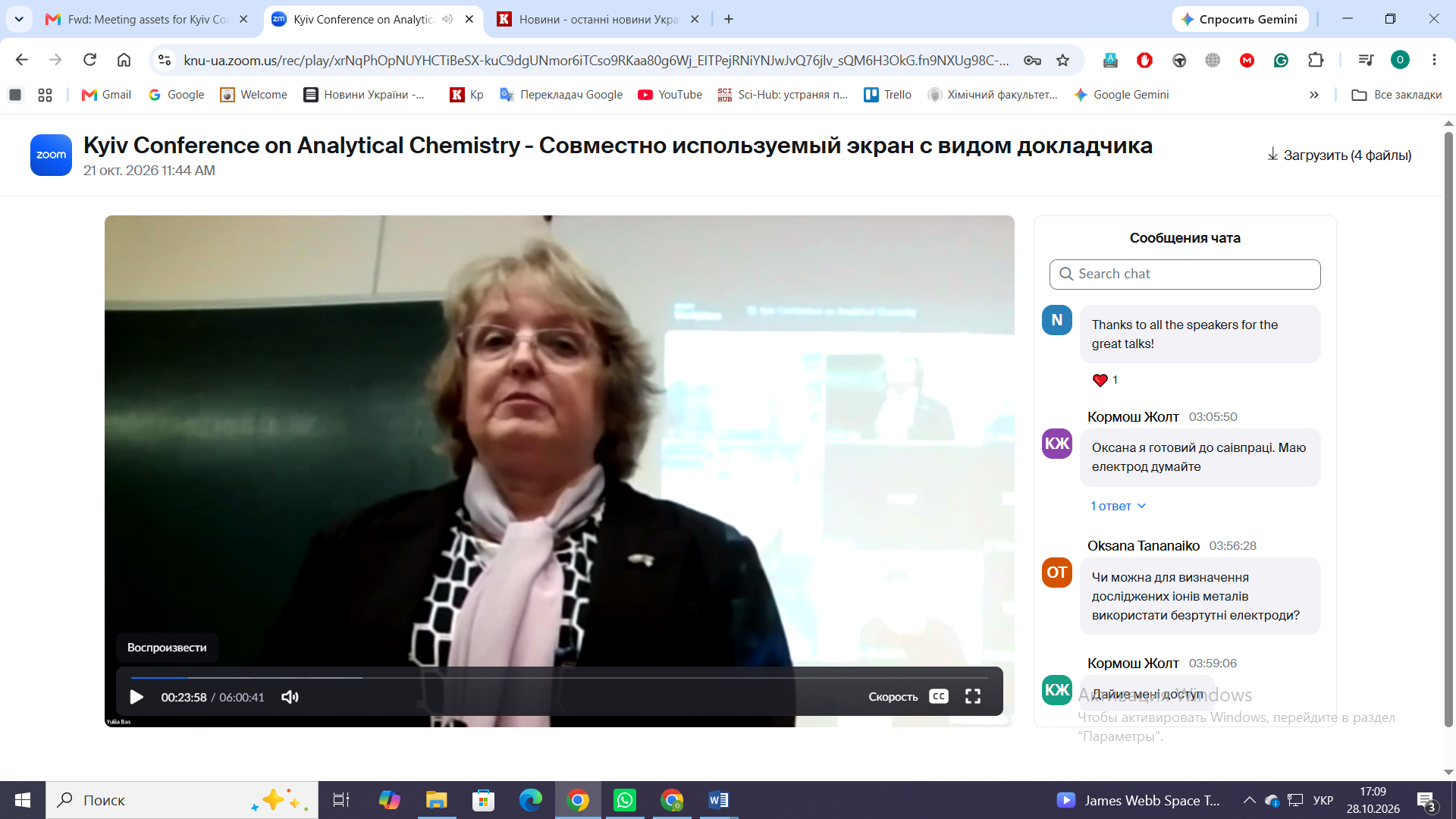
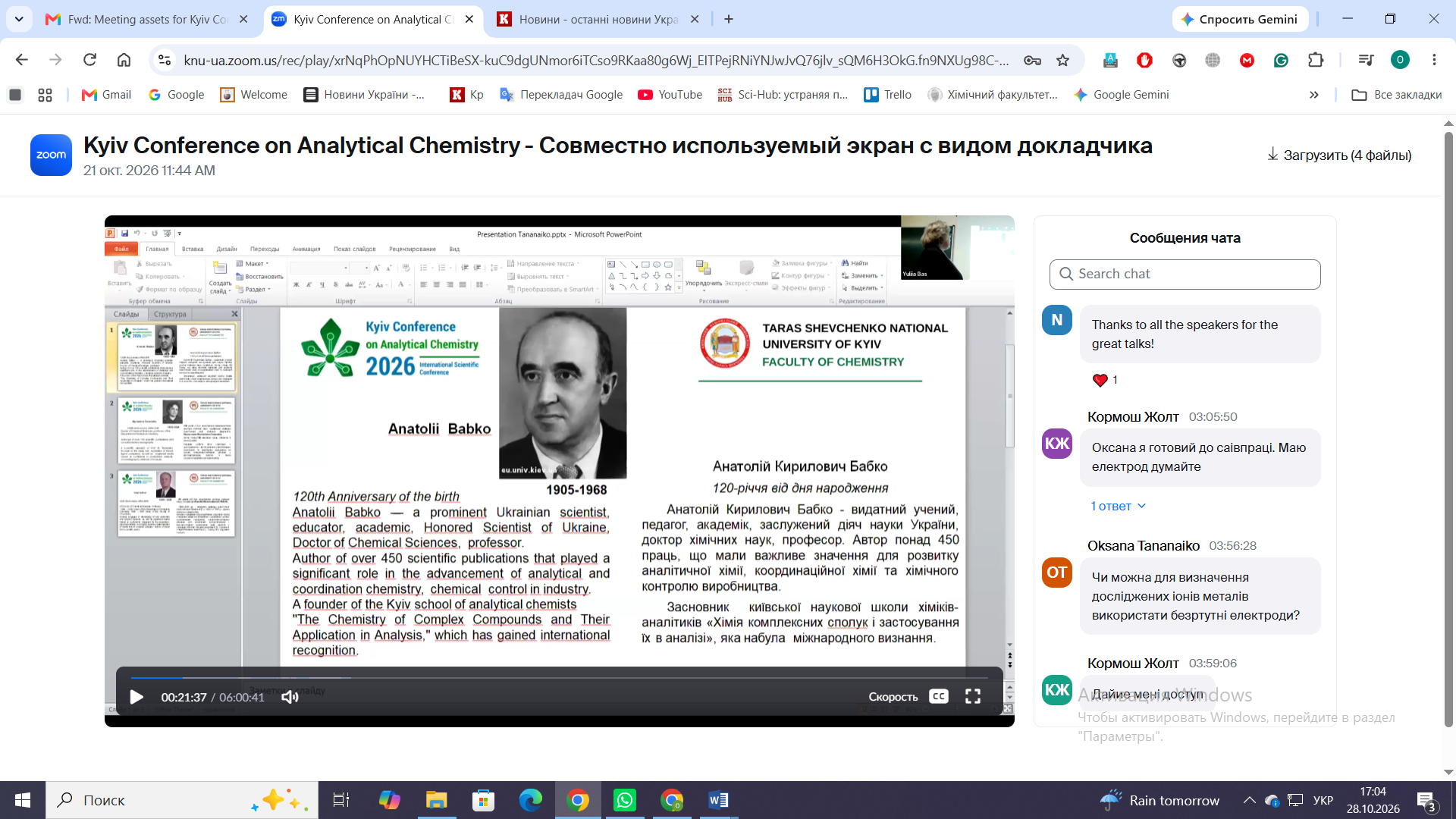
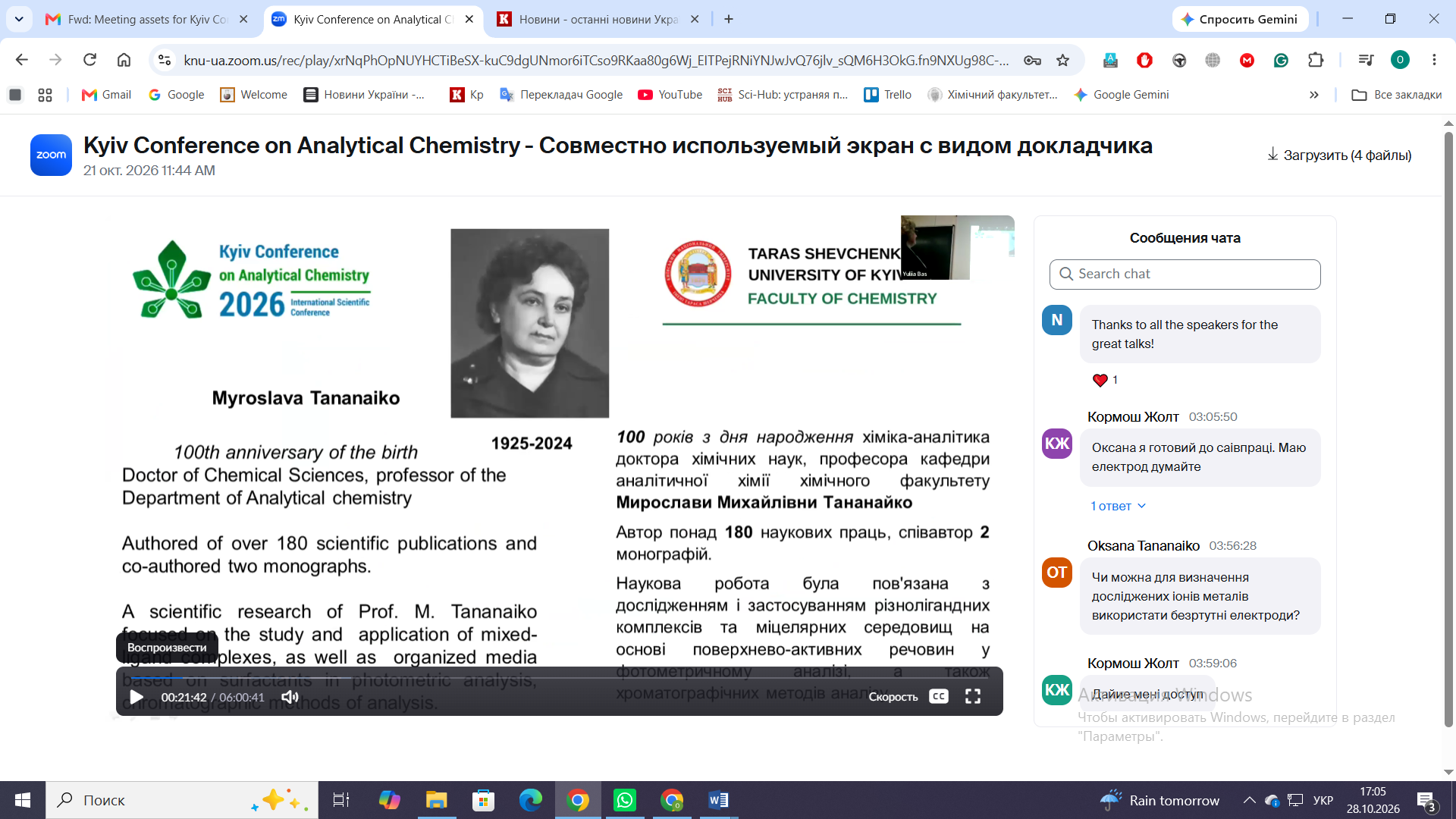
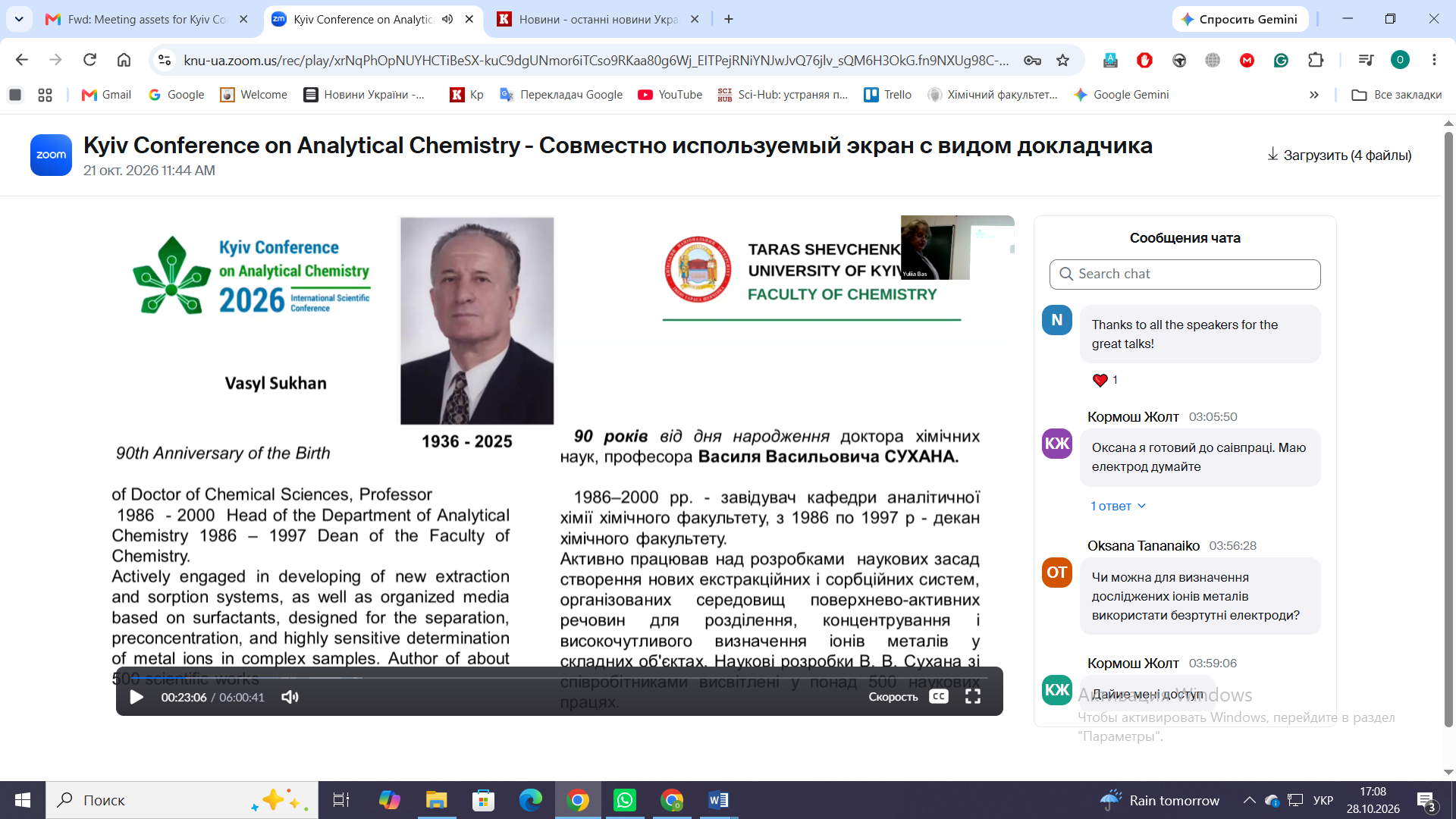
In her introductory remarks, Head of the Department of Analytical Chemistry, Prof. Oksana Tananaiko, paid tribute to the memory of distinguished scholars and mentors whose contributions laid the foundation for the department's current achievements and whose anniversaries were commemorated in 2025–2026: Academician Prof. Anatolii Babko, D.Sc. in Chemistry; Prof. Myroslava Tananaiko, D.Sc. in Chemistry; and Prof. Vasyl Sukhan, D.Sc. in Chemistry.
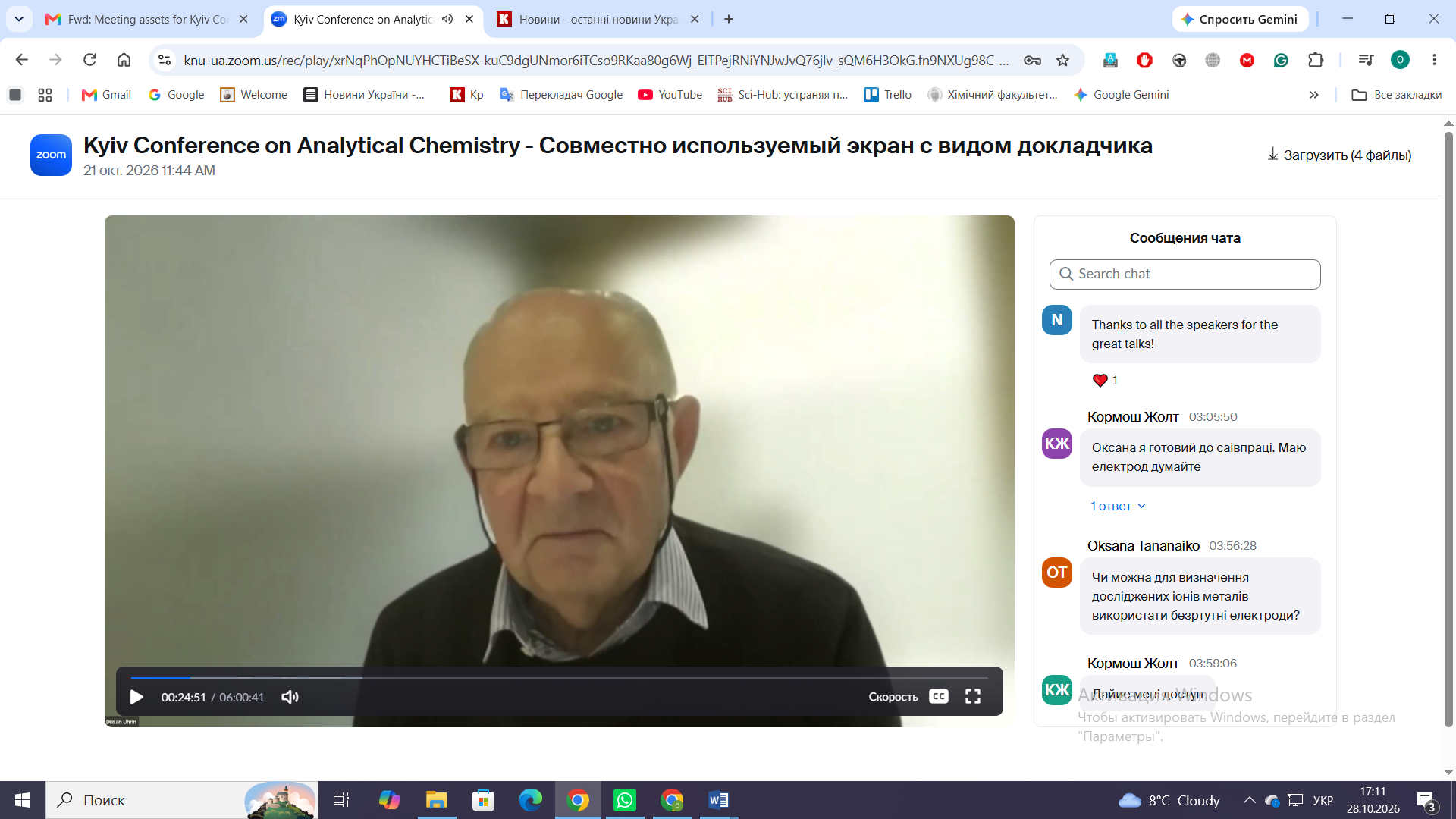
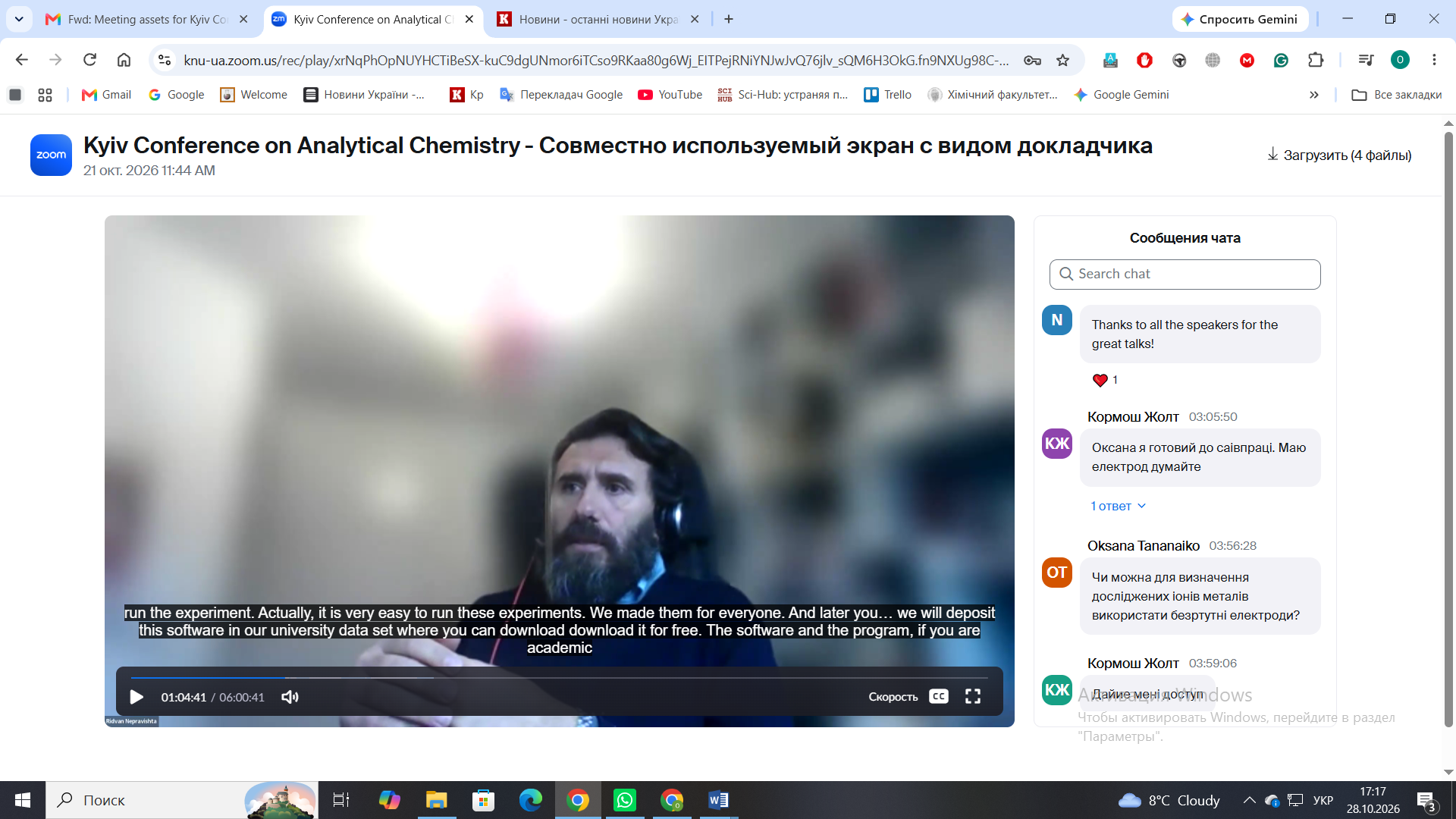
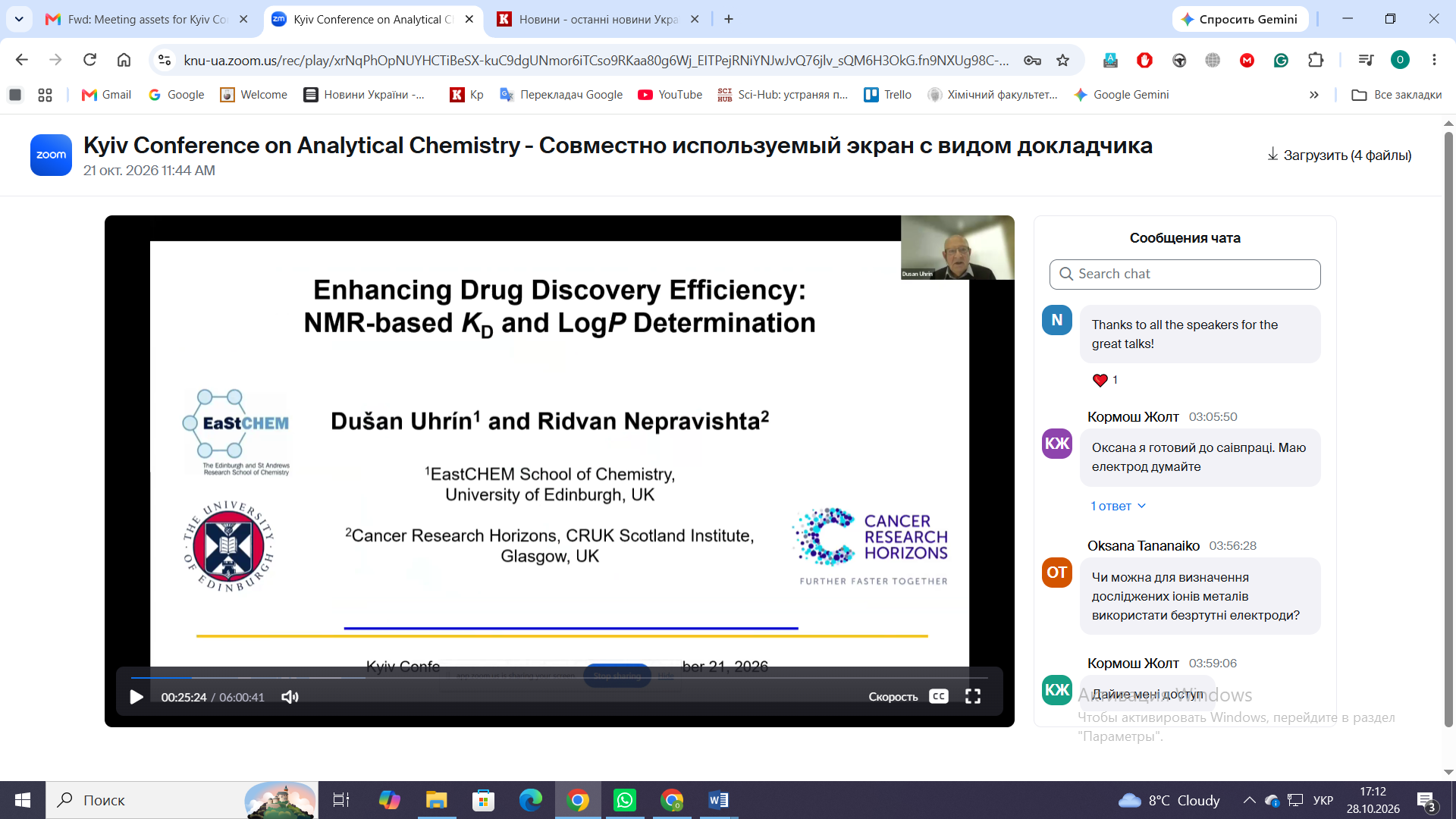
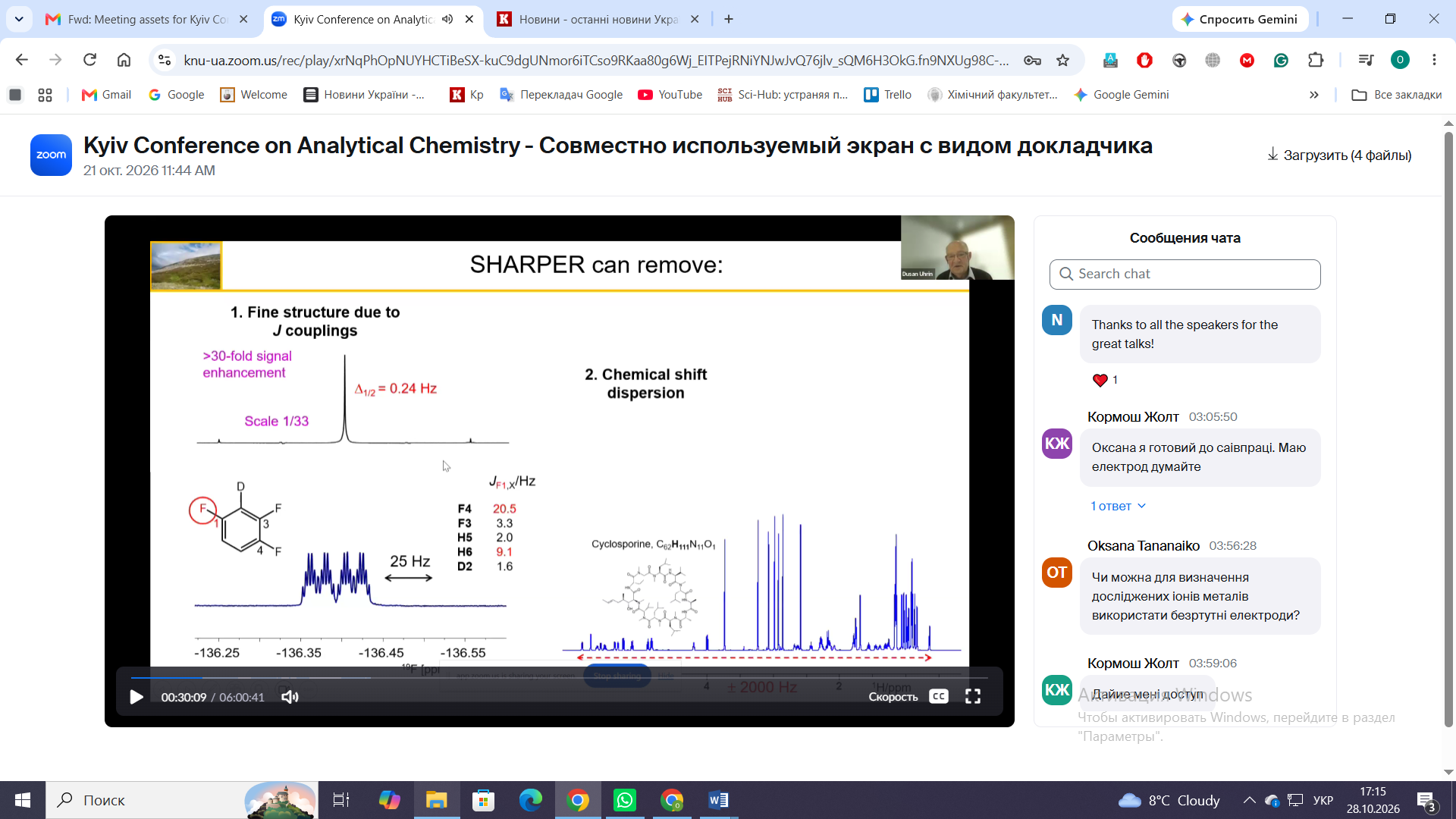
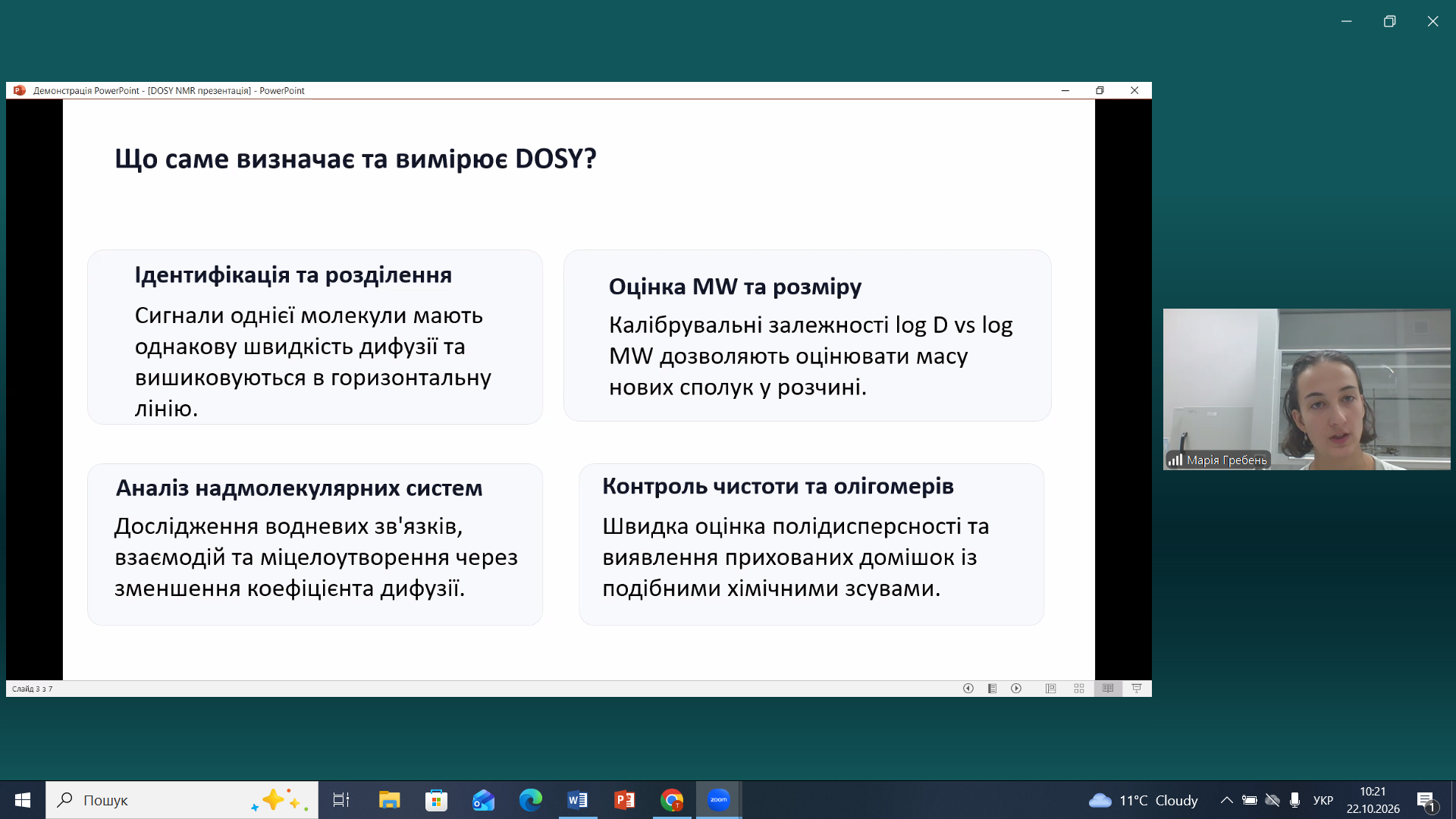
The conference featured a rich and engaging scientific programme. Innovative ideas were presented by Prof. Dušan Uhrín and Dr. Ridvan Nepravishta (University of Edinburgh) in their lecture entitled “Enhancing Drug Discovery Efficiency: NMR-Based Kd and logP Determination.”
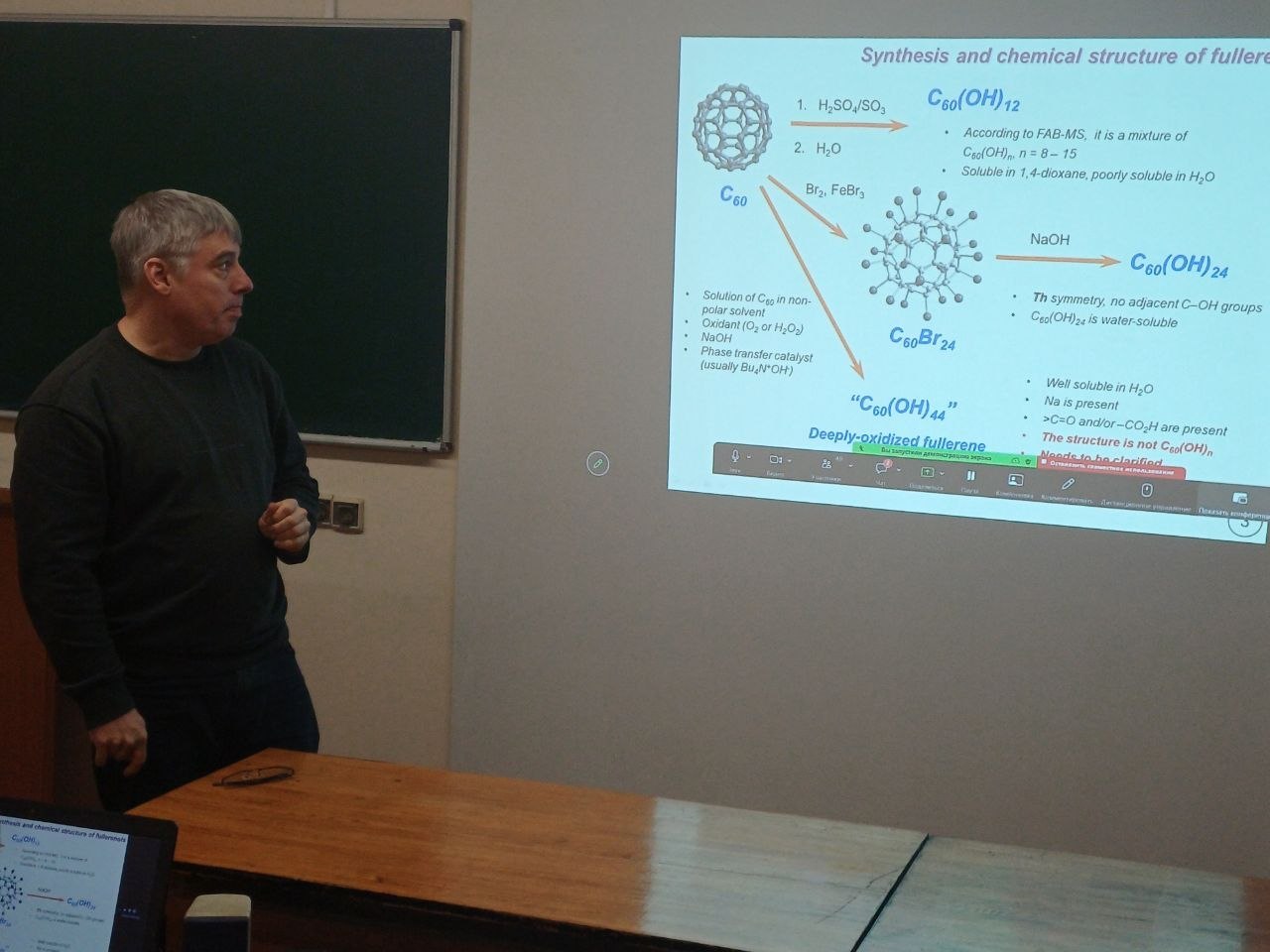
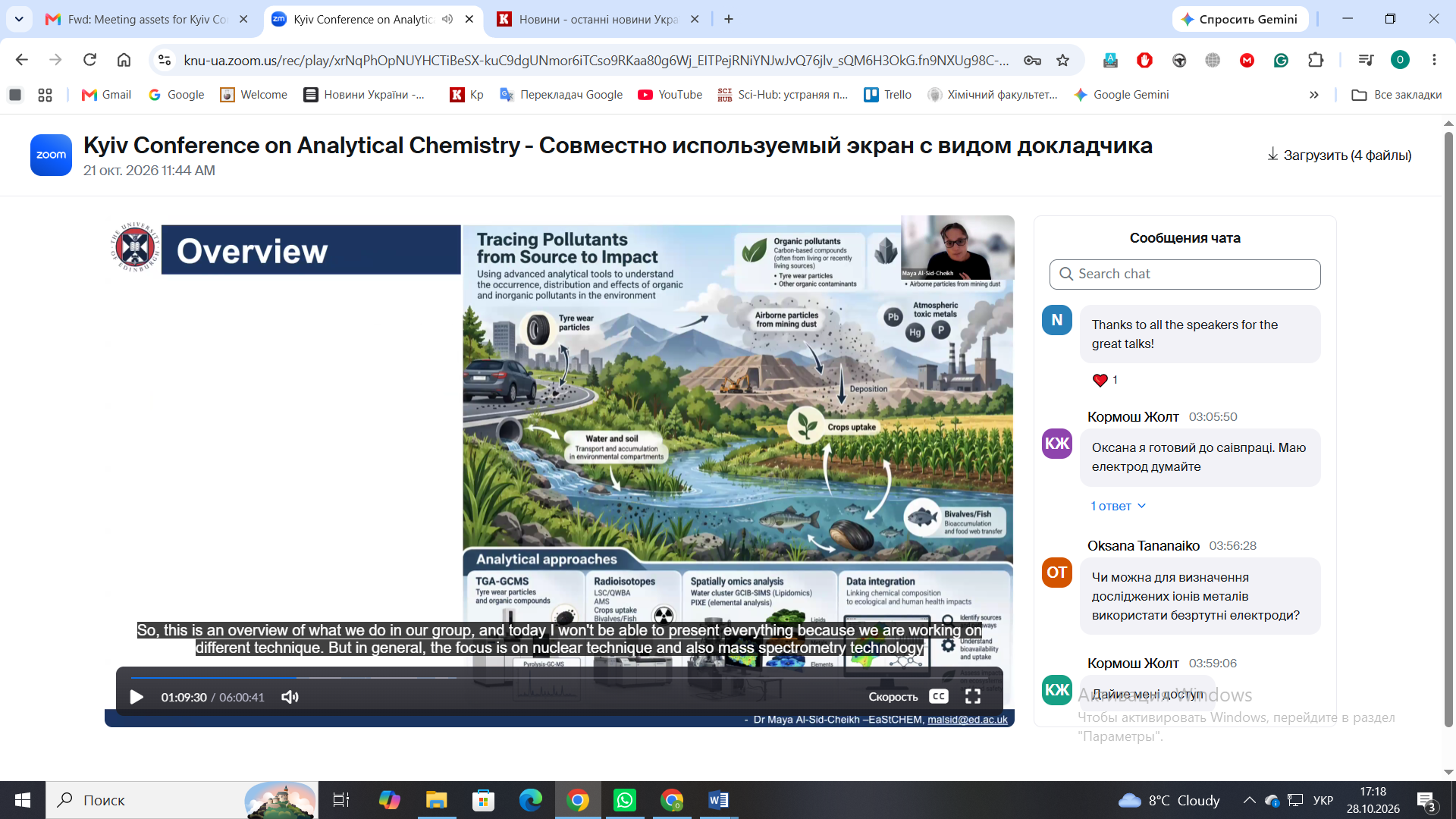
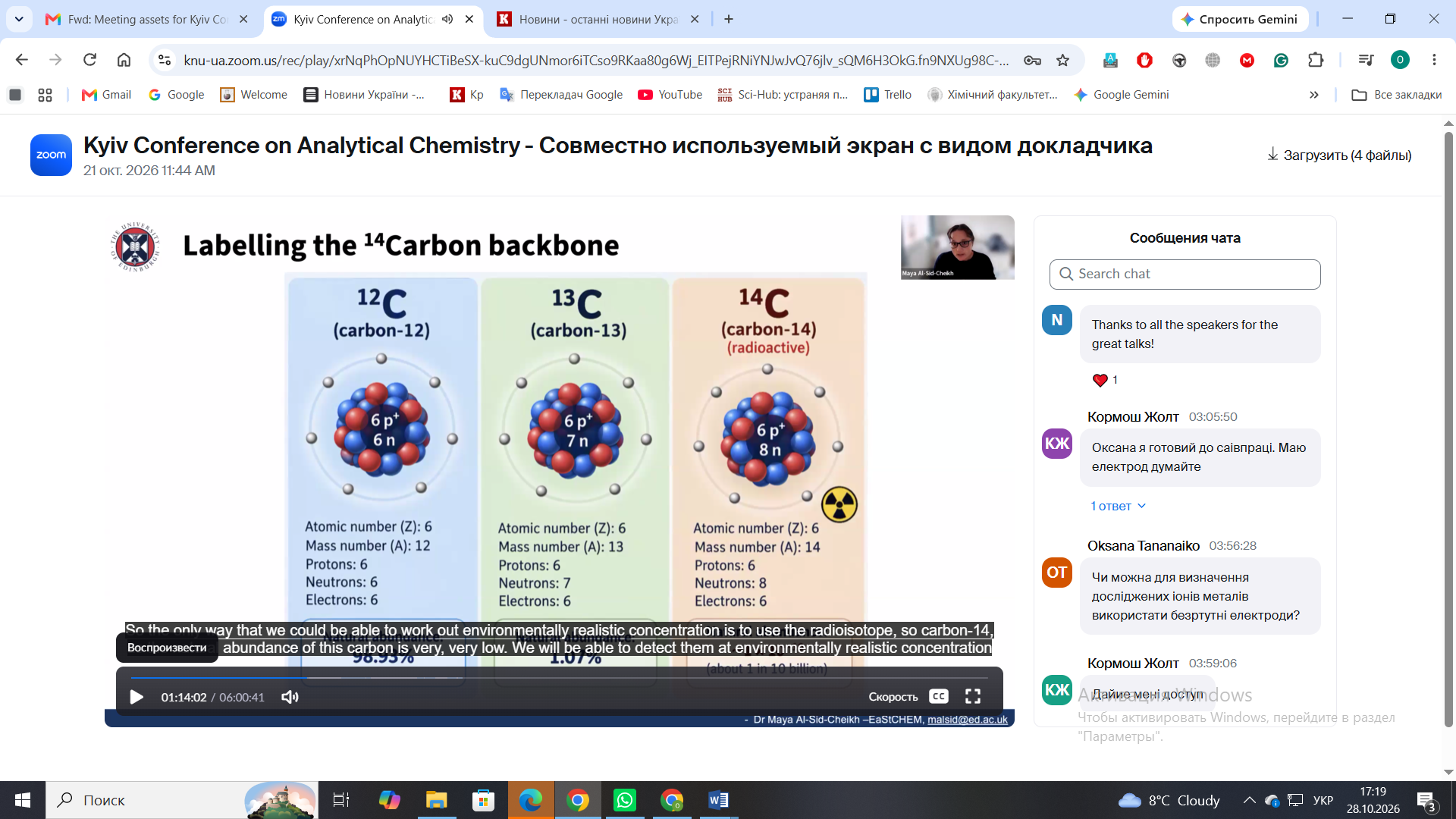
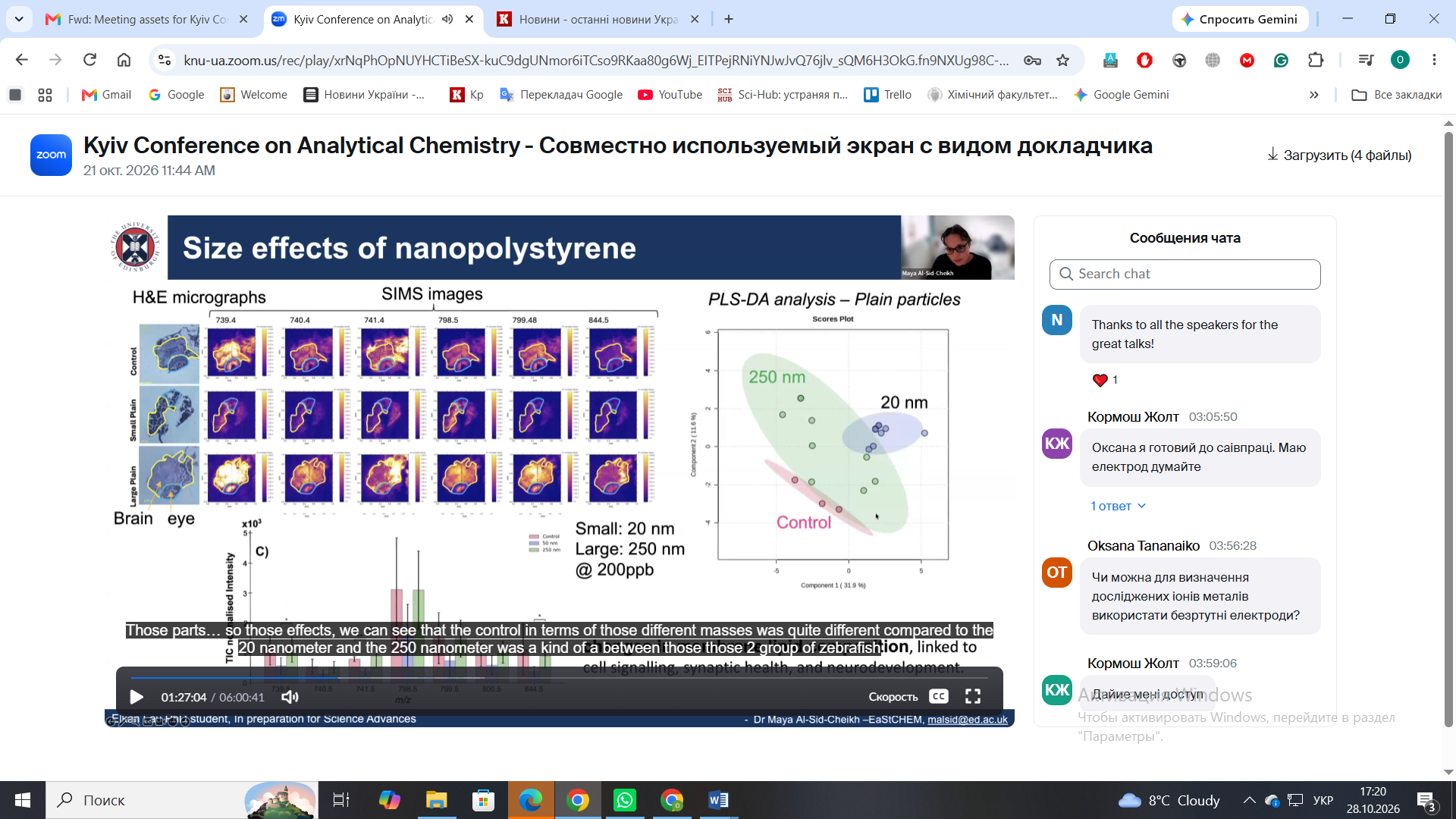
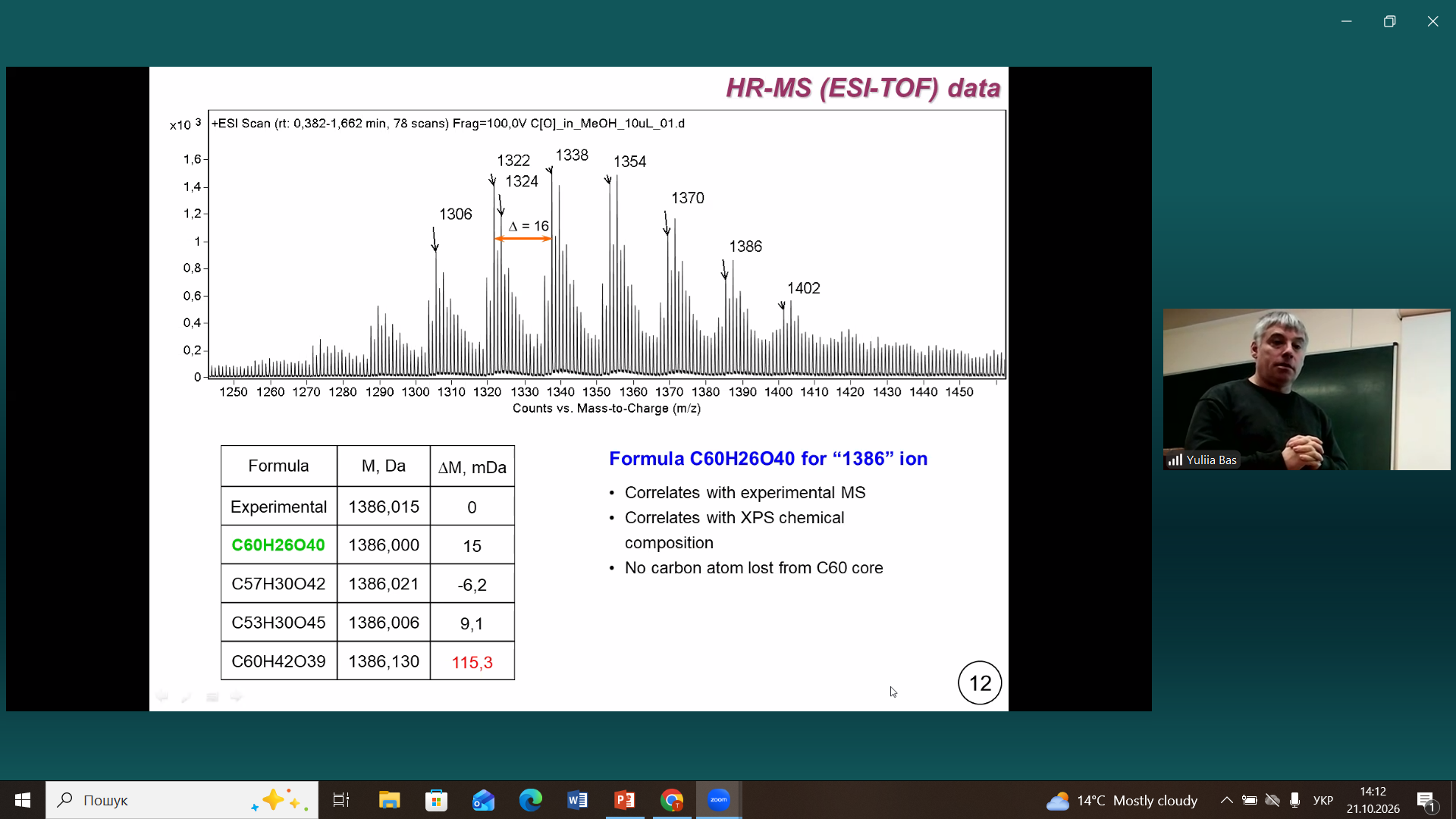
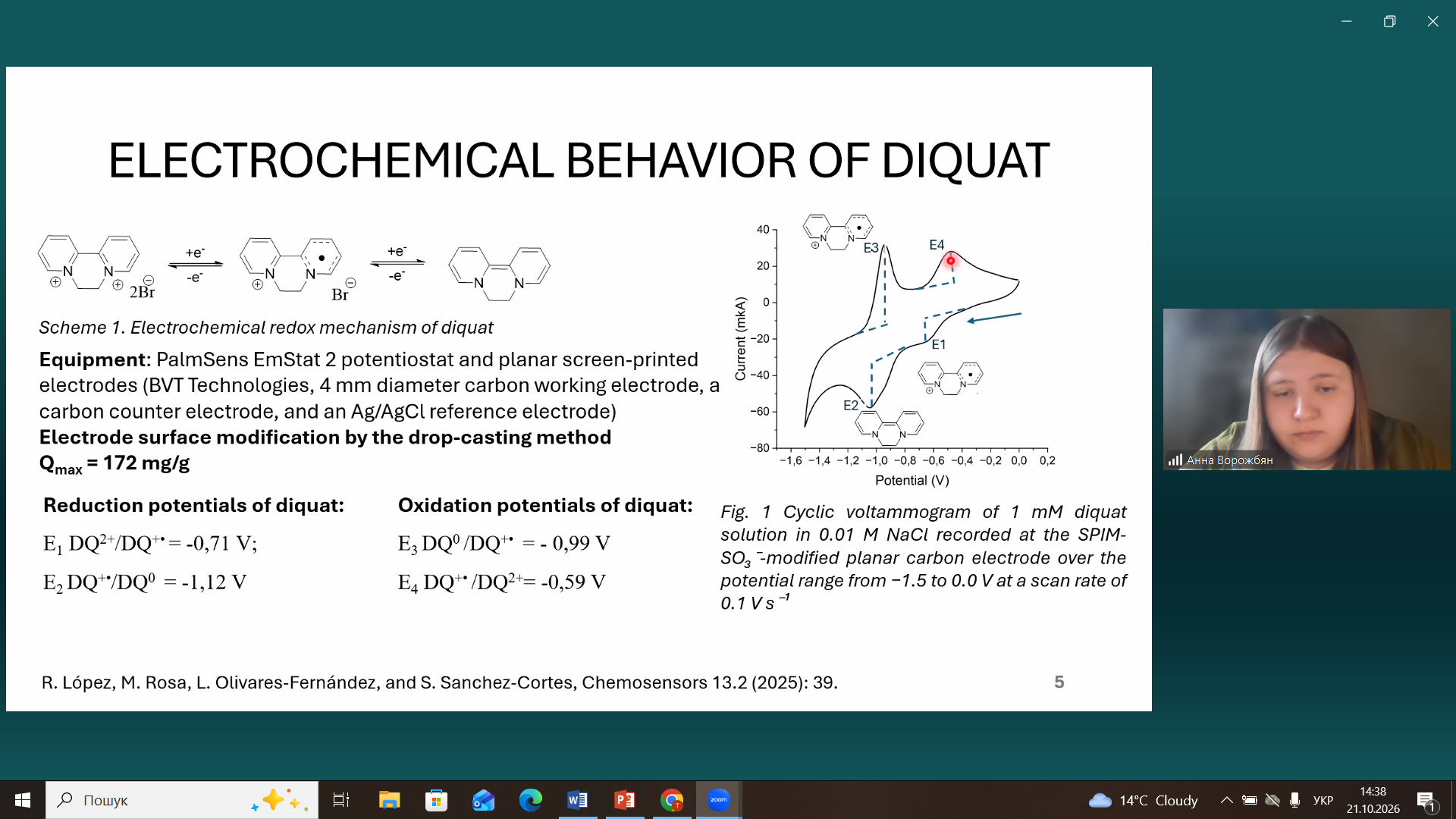
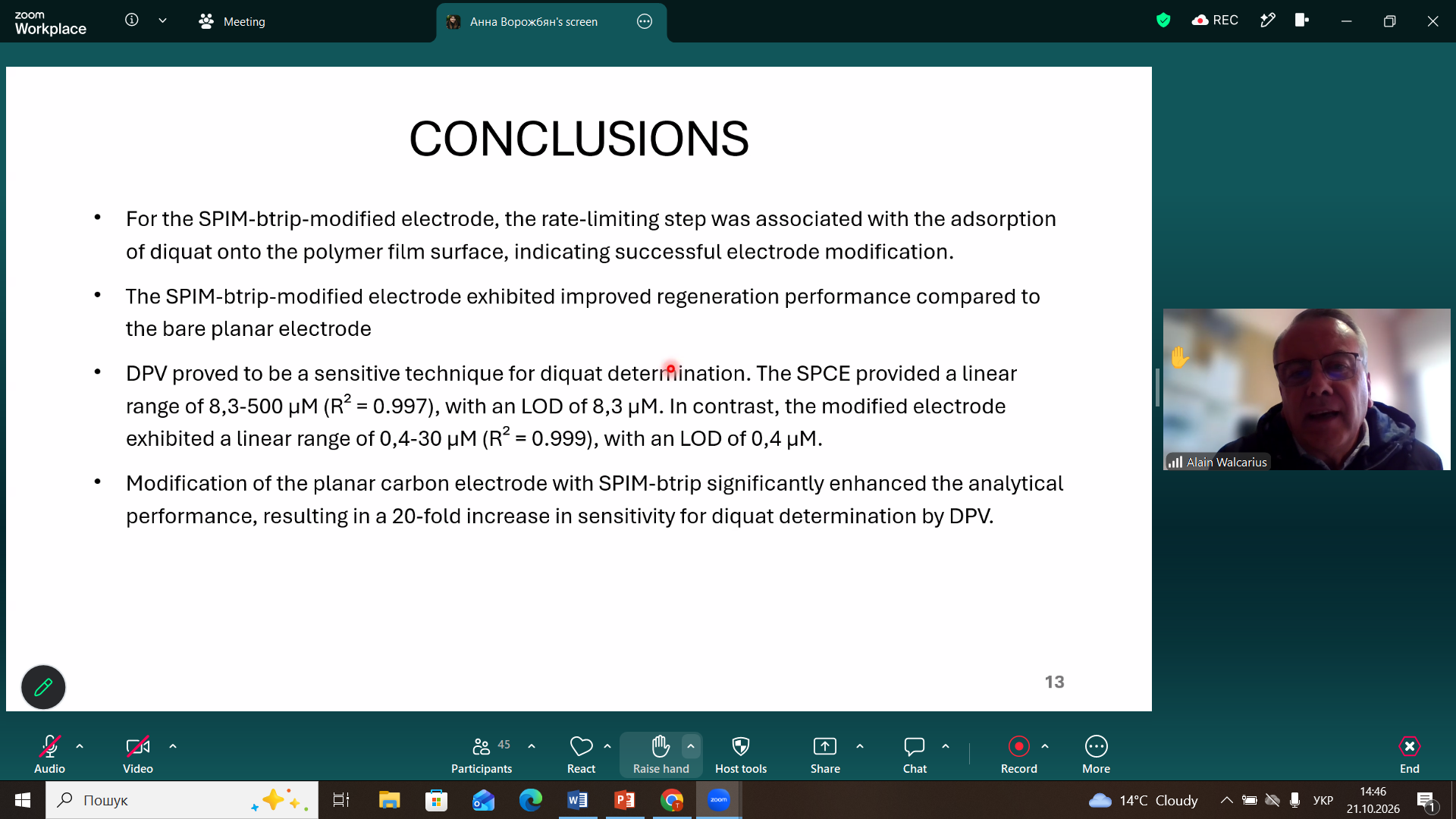
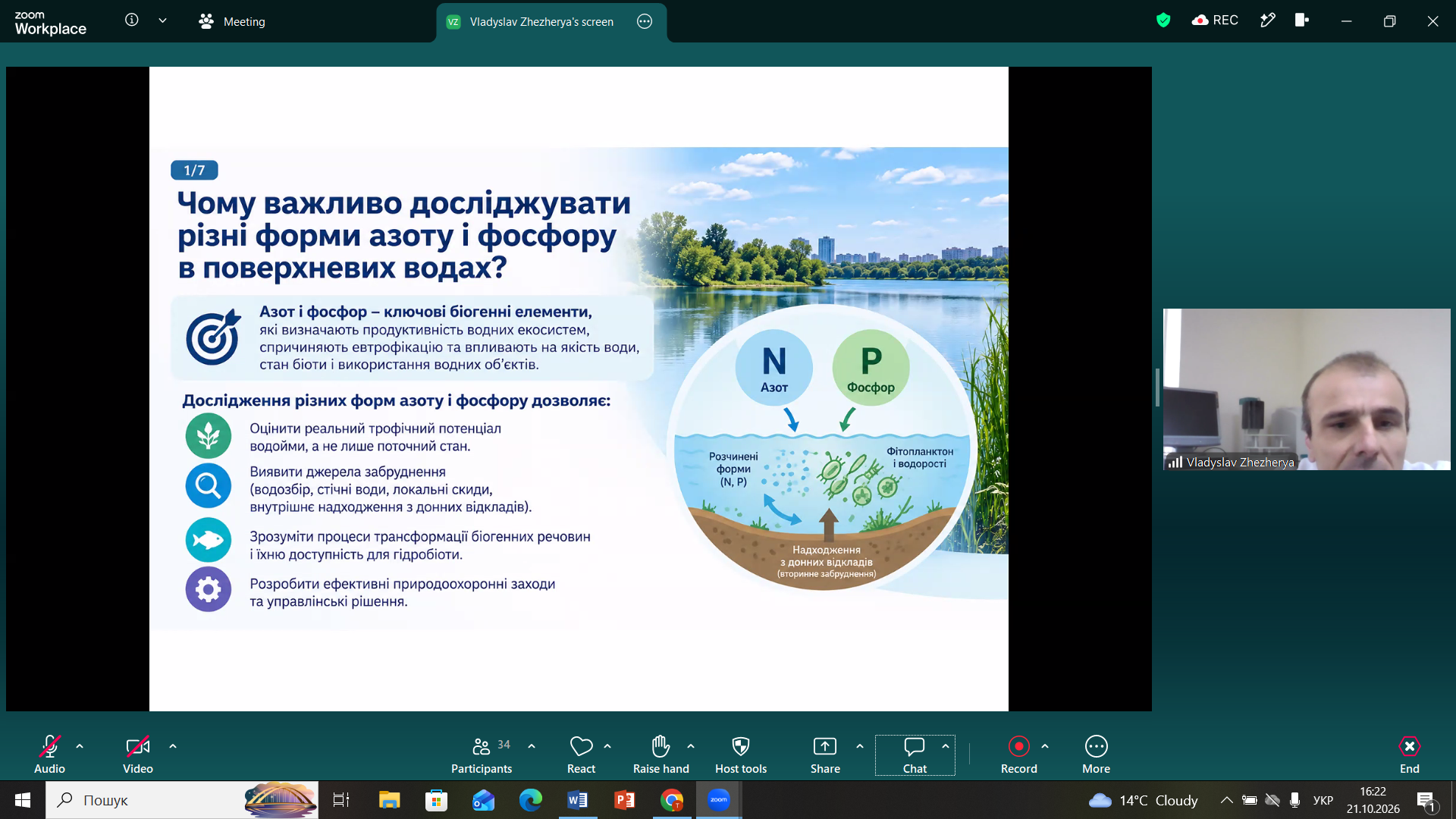
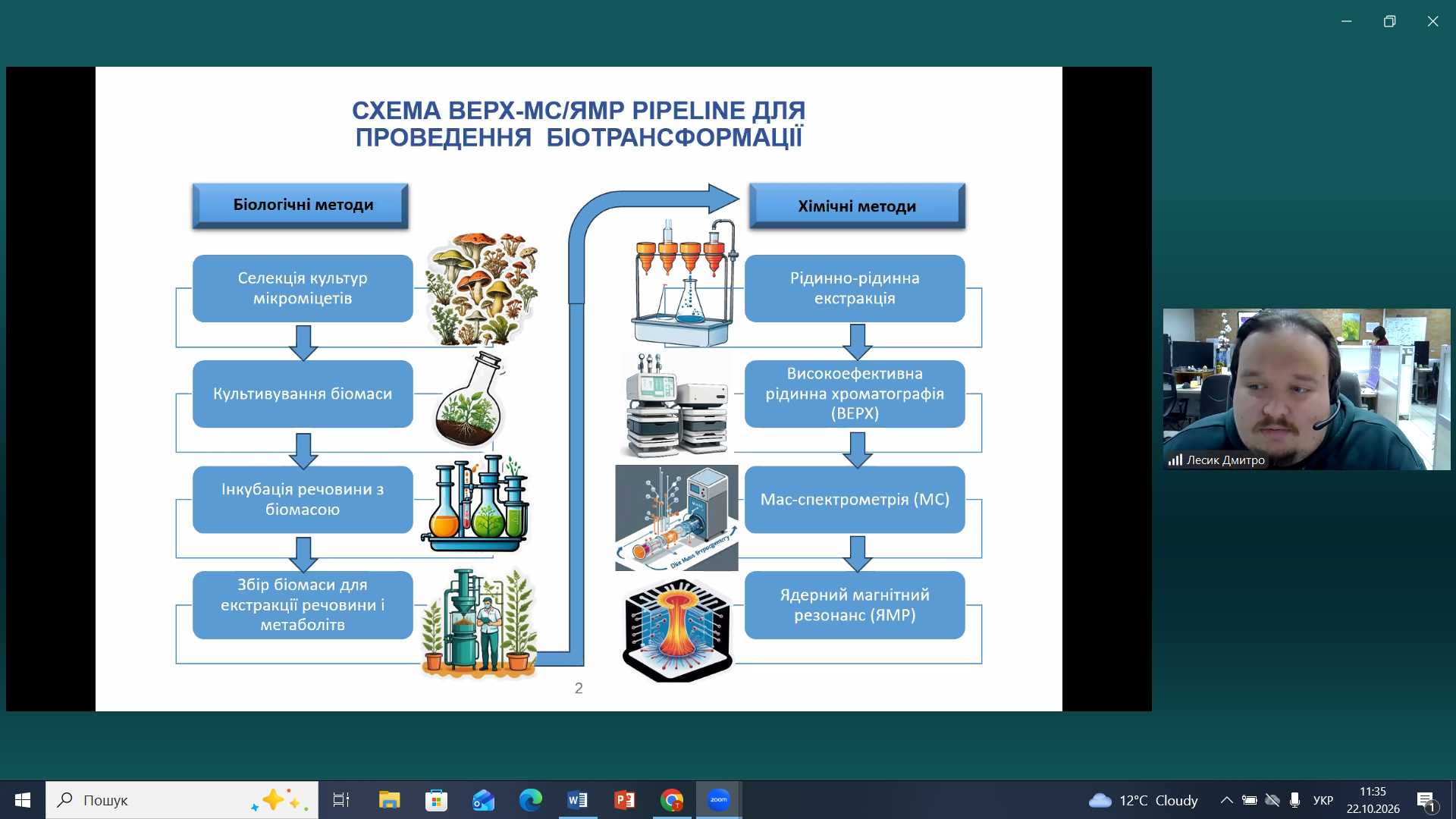
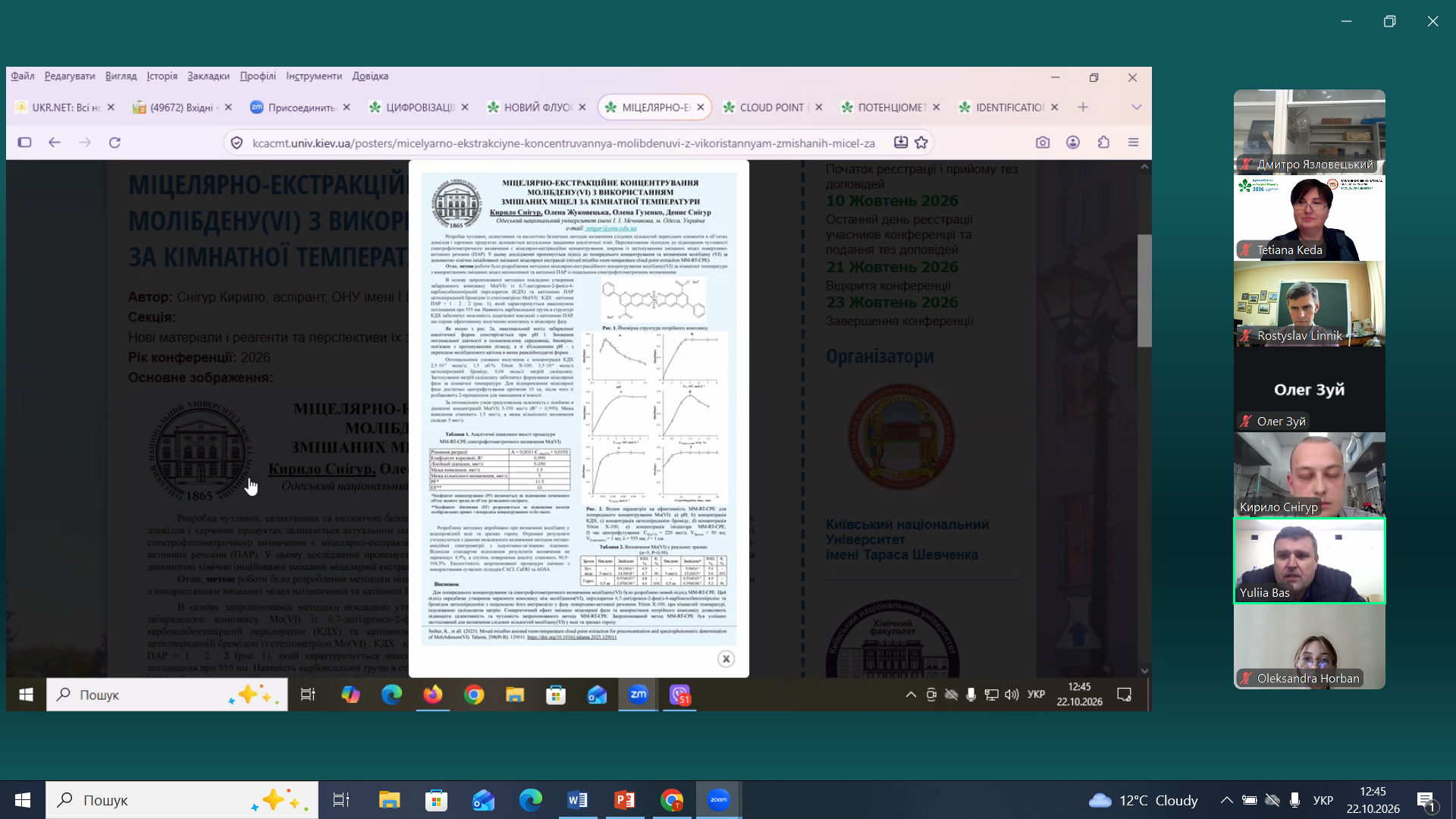
Dr. Maya Al-Sid-Cheikh (University of Edinburgh) outlined the ongoing research projects in environmental chemistry currently being conducted by her research group. The presentation by Dr. Sergei Alekseev, D.Sc. in Chemistry (Taras Shevchenko National University of Kyiv), focused on new approaches to the modification of C60 fullerenes. Dr. Anastasiia Mosendz, PhD (Taras Shevchenko National University of Kyiv), presented research findings on the development of solid-phase extraction preconcentration techniques and chromatographic determination of nitroaromatic compounds.
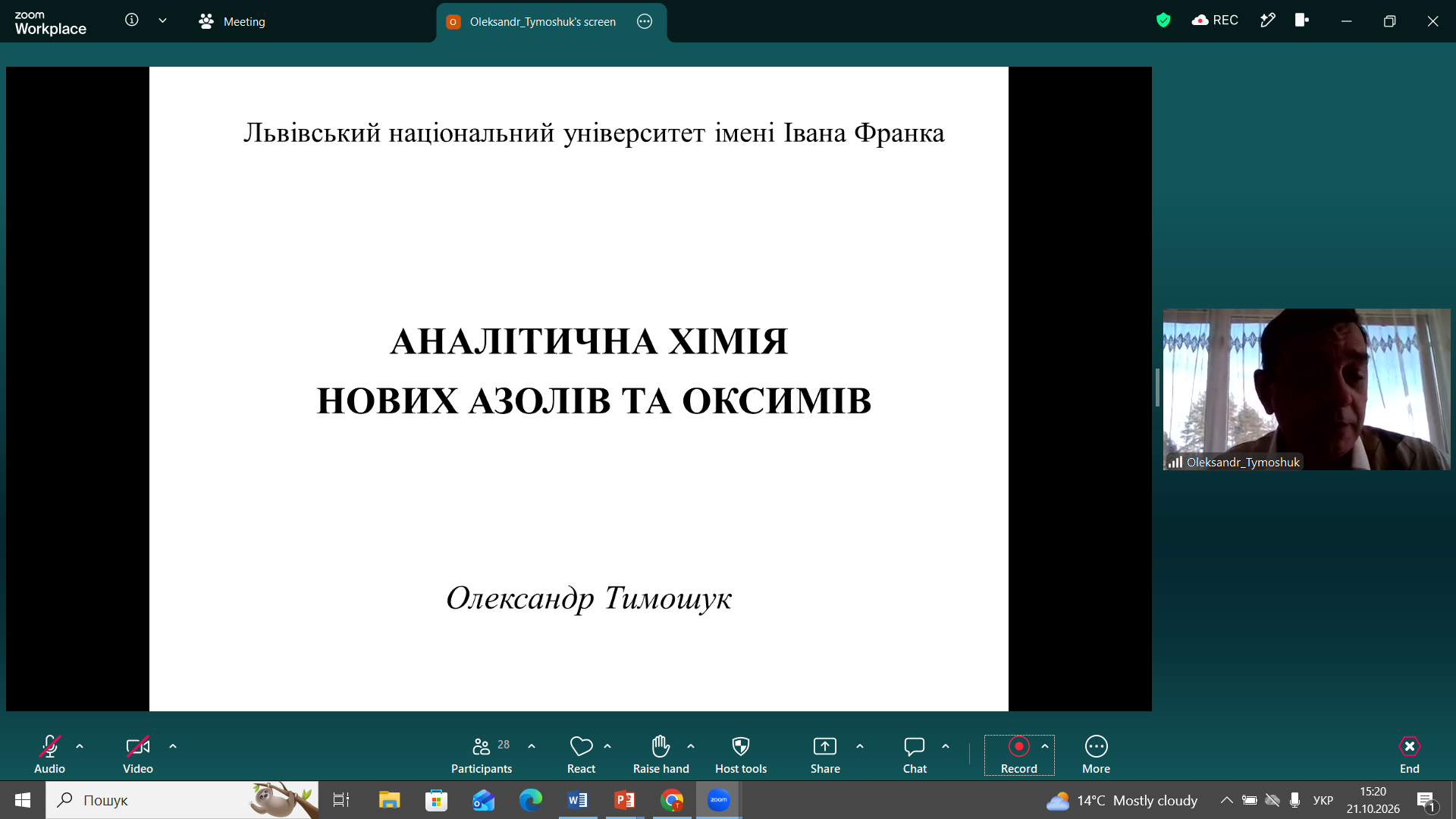
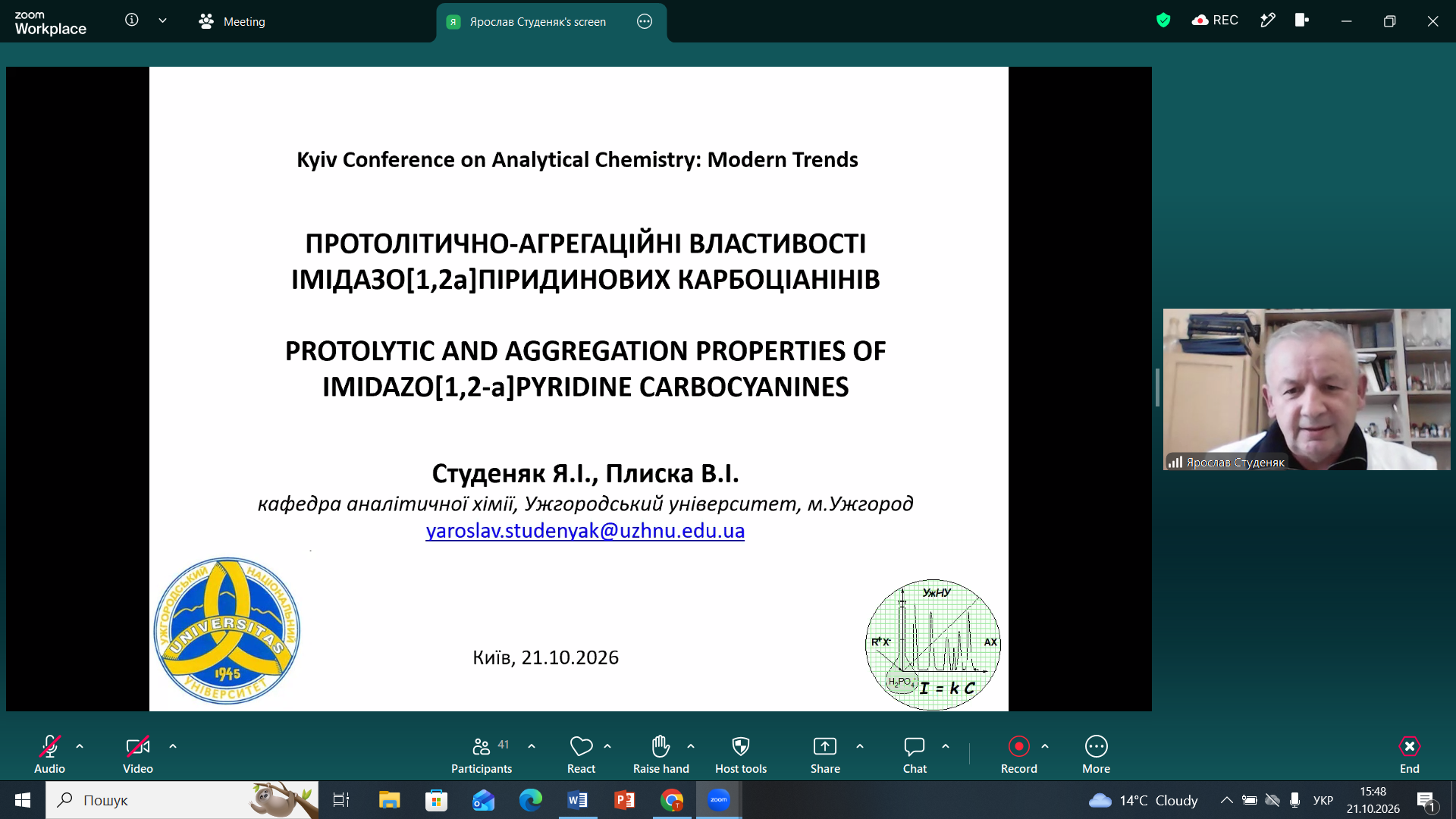
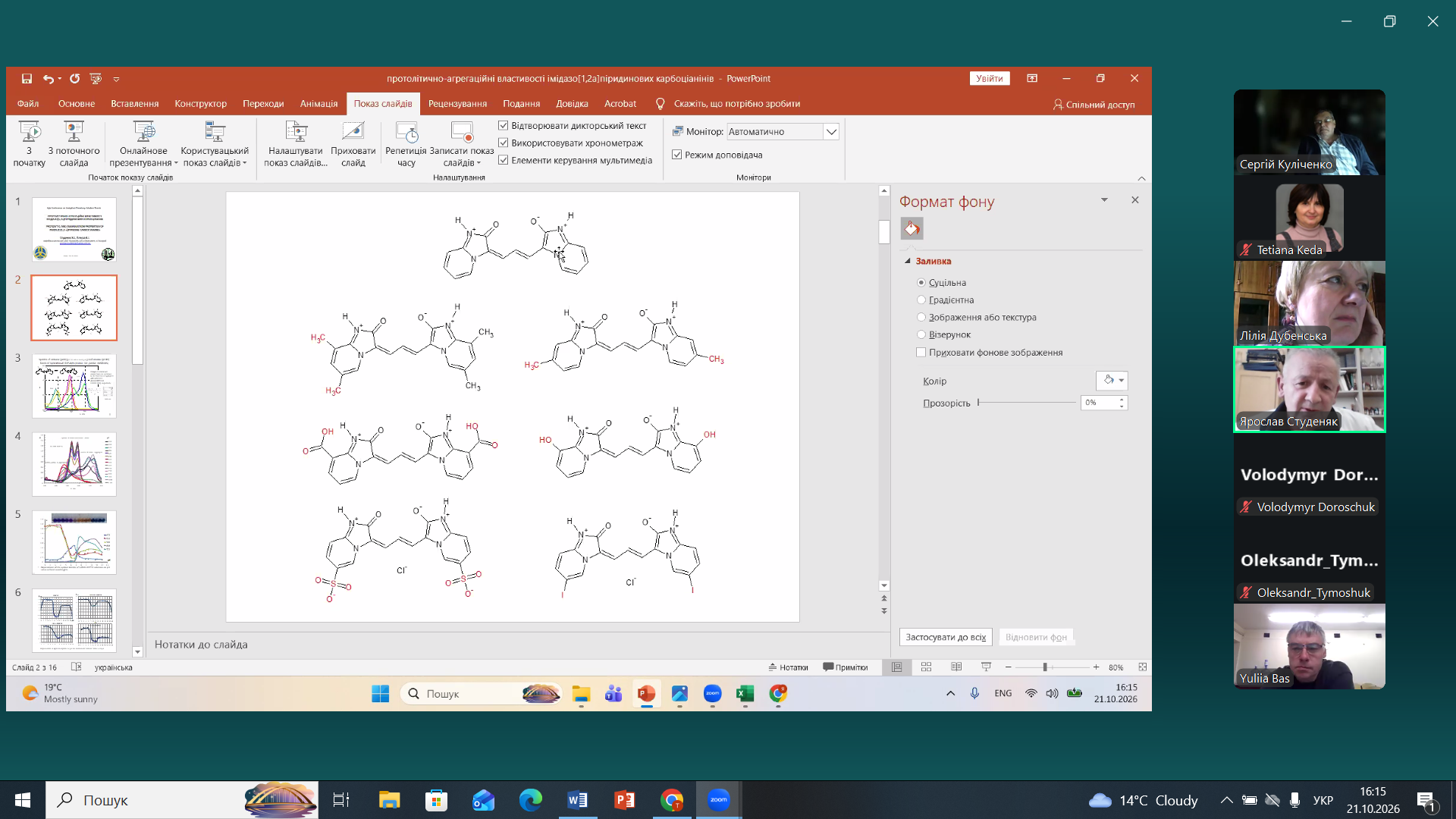
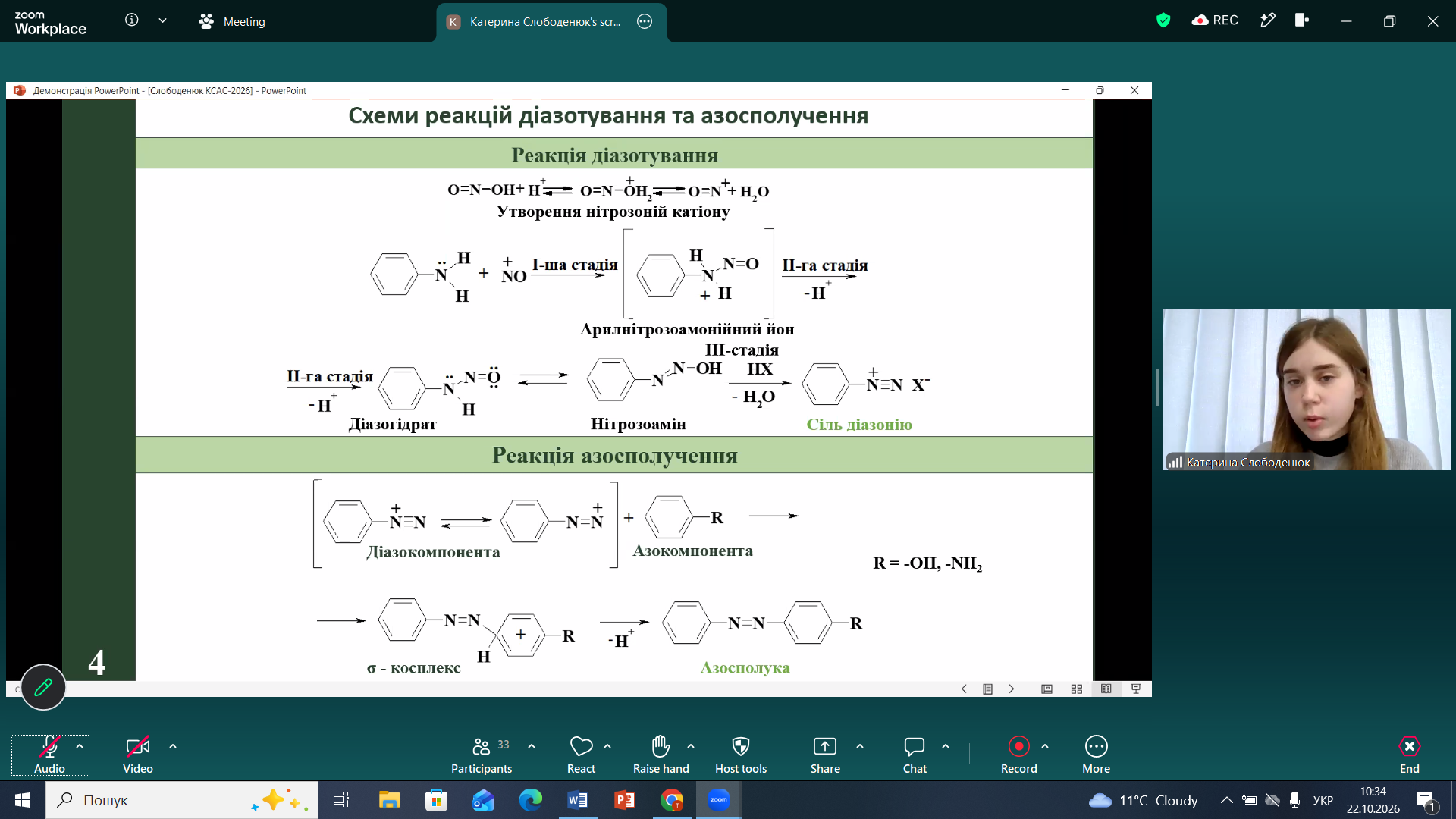
Dr. Oleksandr Tymoshuk, PhD in Chemistry (Ivan Franko National University of Lviv), shared research advances in the analytical chemistry of novel azoles and oximes. Dr. Yaroslav Studeniak, PhD in Chemistry, Head of the Department of Analytical Chemistry at Uzhhorod National University, summarized studies of the protolytic and aggregation properties of carbocyanine dyes.
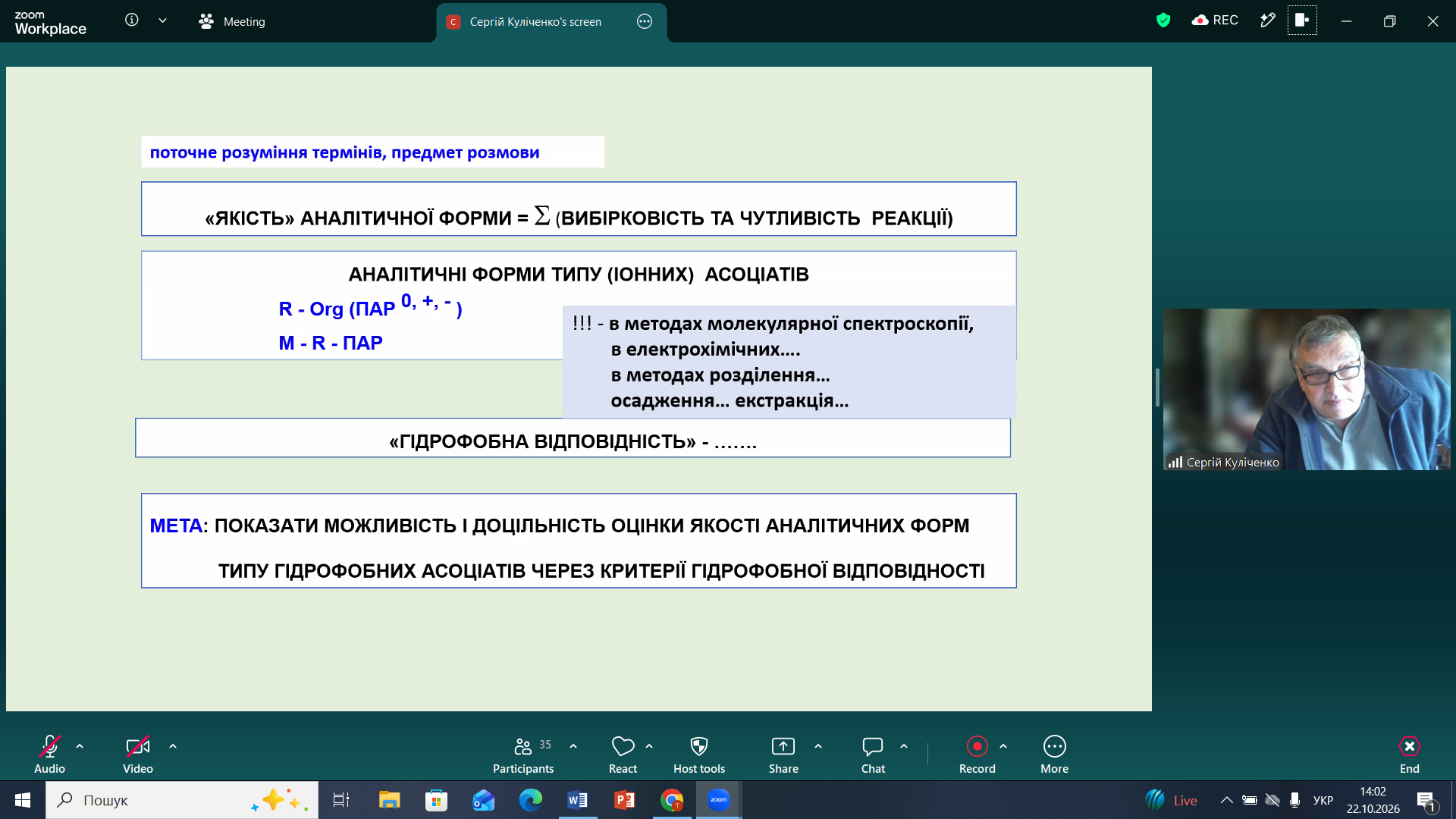
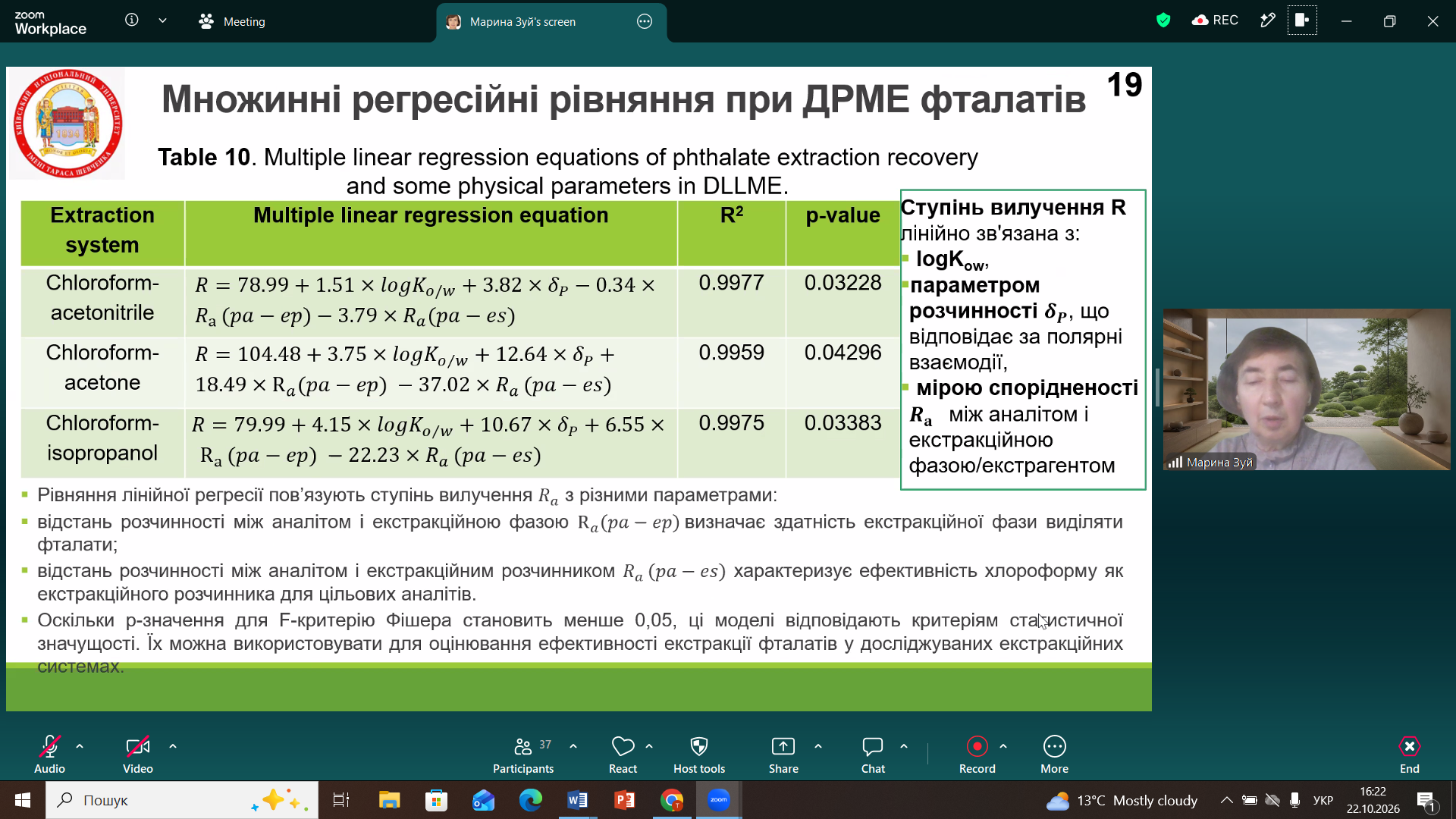
Dr. Serhii Kulichenko, PhD in Chemistry (Taras Shevchenko National University of Kyiv), presented a detailed analysis of how the hydrophobic compatibility between a reagent and an analyte influences the analytical signal. Dr. Maryna Zui, PhD in Chemistry (Taras Shevchenko National University of Kyiv), discussed solid-phase and liquid-phase microextraction of oxygen-containing organic compounds and their subsequent determination by gas chromatography.
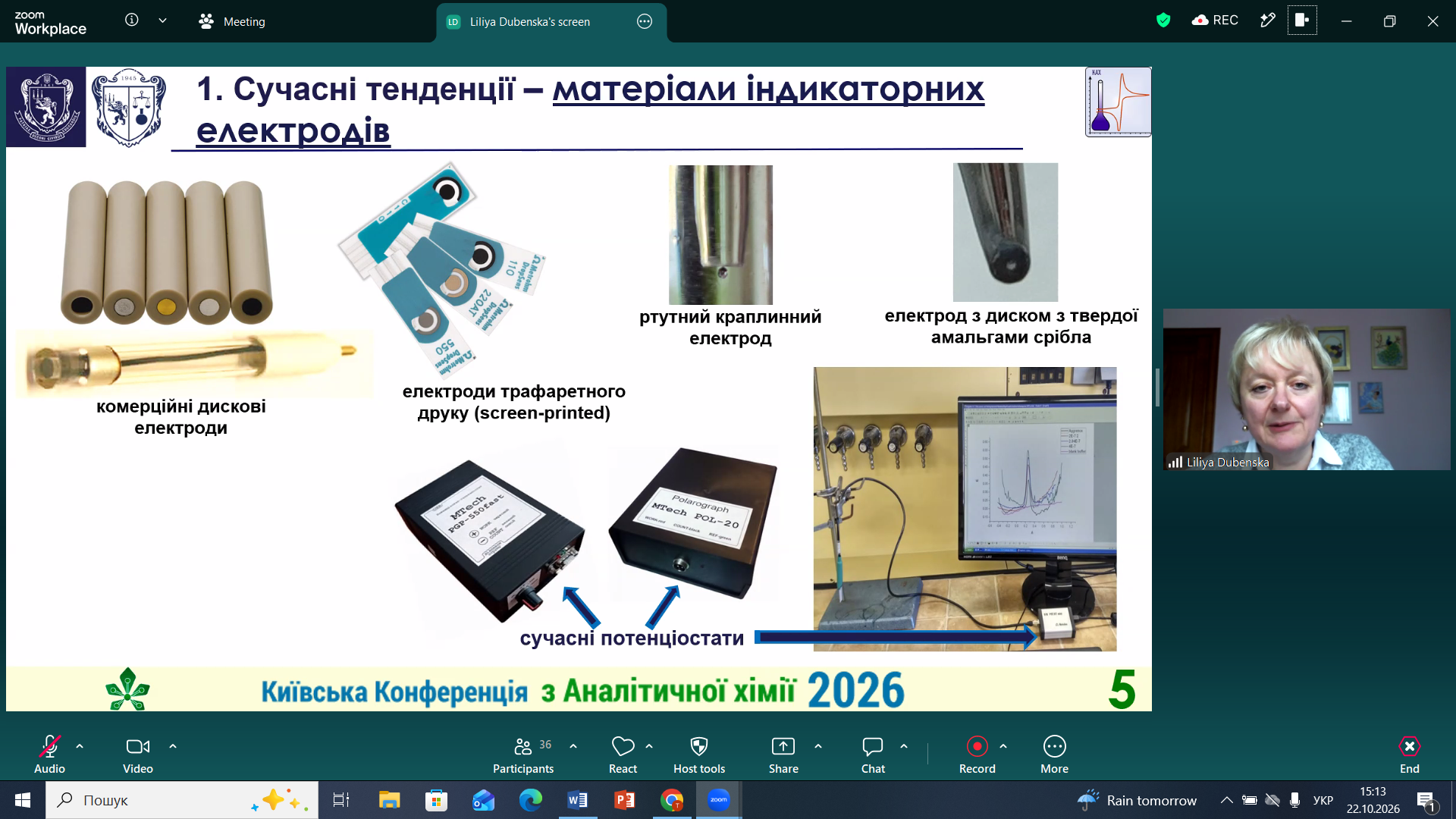
Conference participants also attended plenary lectures presenting the results of many years of research by Dr. Yuliia Skrypynets, PhD in Chemistry (A.V. Bogatsky Physico-Chemical Institute), and Dr. Liliia Dubenska, PhD in Chemistry (Ivan Franko National University of Lviv). These presentations prompted interesting questions and recommendations concerning future research directions, as well as discussions about the importance of preparing and defending higher doctoral dissertations (Doctor of Sciences) in chemistry.
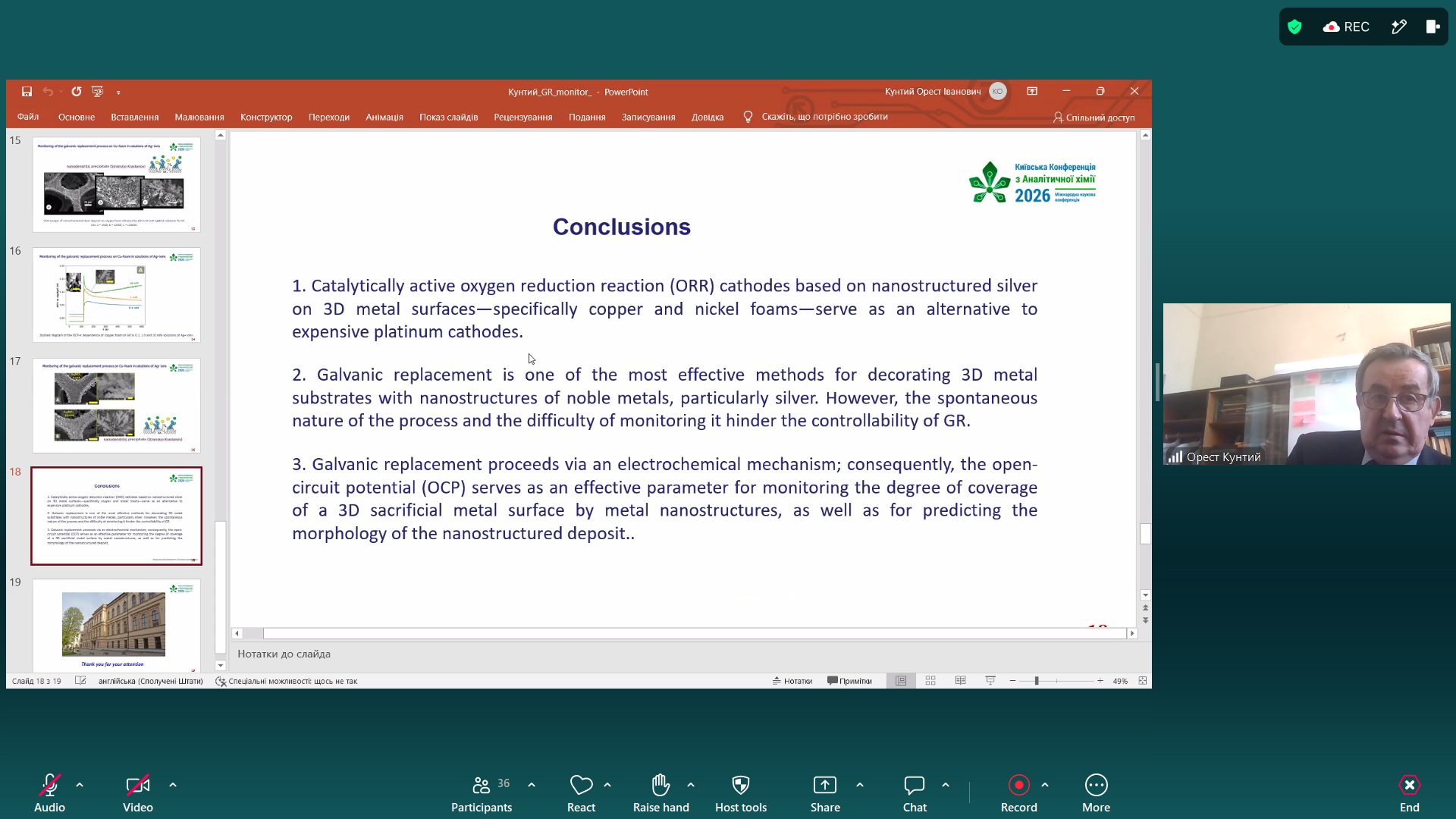
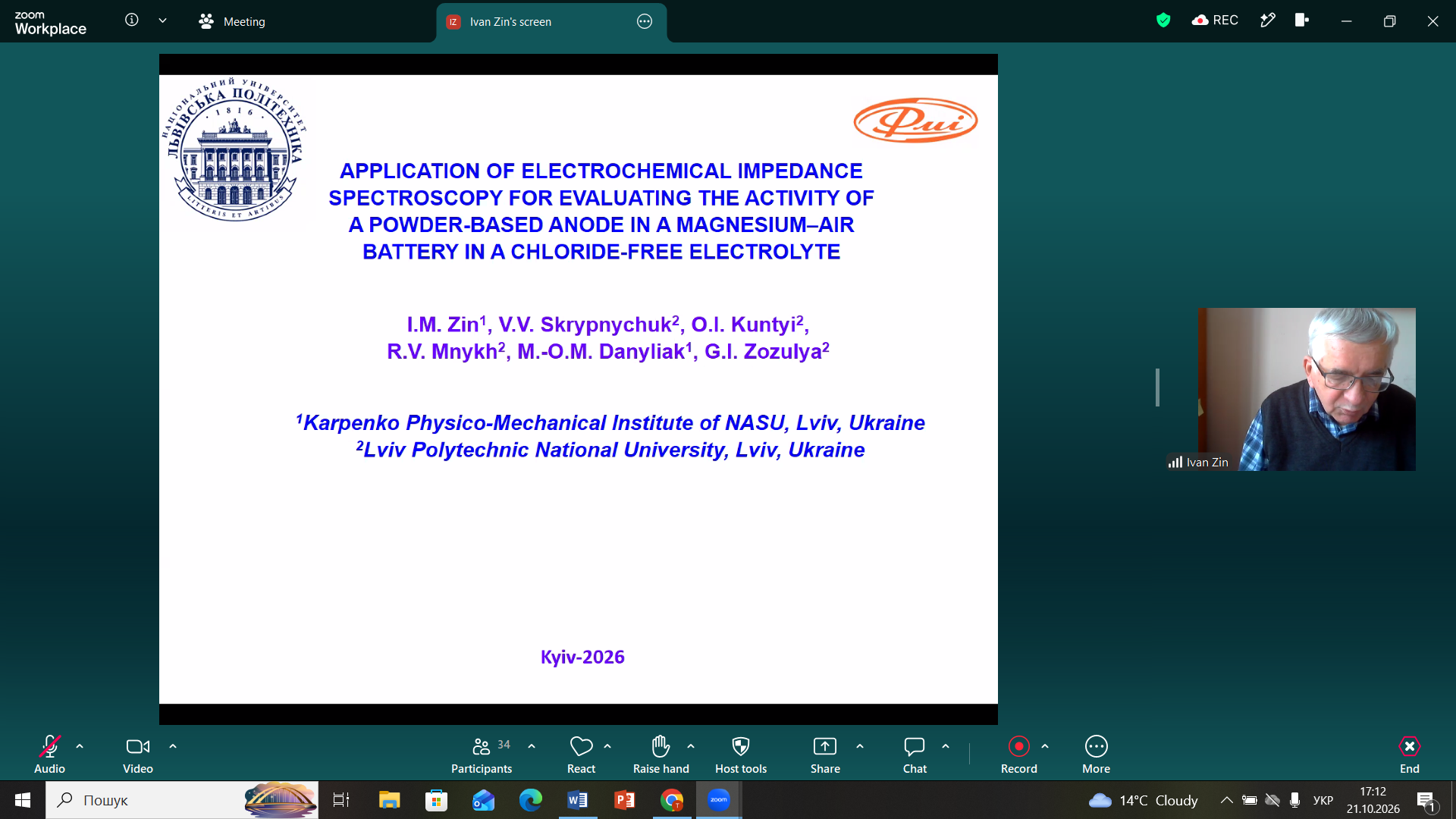
Researchers from Lviv Polytechnic National University, the Ukrainian Hydrometeorological Institute, the Karpenko Physico-Mechanical Institute, and the Donbas State Engineering Academy also contributed to the conference. We look forward to continued fruitful cooperation with researchers from these institutions.
PhD students actively participated in the conference, which is undoubtedly one of the most important indicators of the future development of analytical chemistry as a scientific discipline.
During the concluding discussion, participants highlighted the richness and diversity of the conference programme, the need for regular meetings through professional conferences and seminars, and the importance of preparing higher doctoral dissertations in the field of analytical chemistry.
The next Kyiv Conference on Analytical Chemistry is scheduled for 2028.